
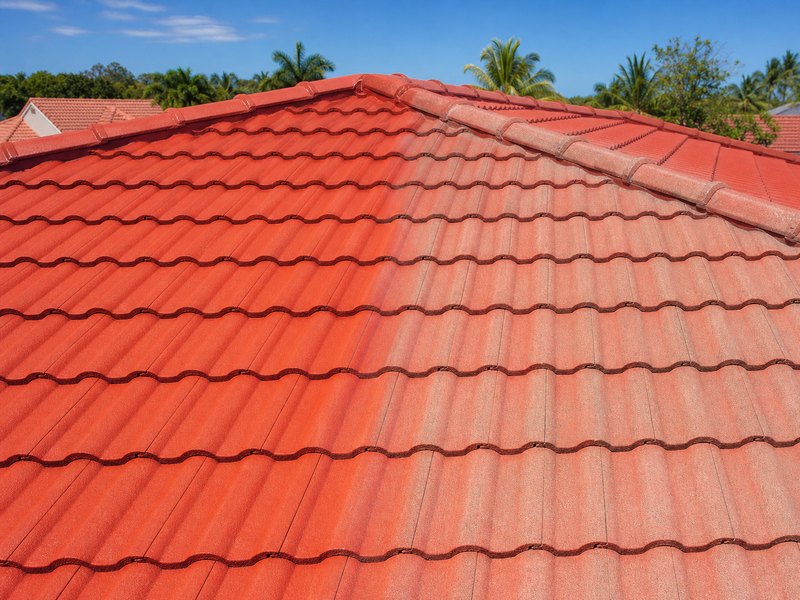
Plastic roof tile color fading describes a lasting change in the exposed surface after outdoor weathering. Sunlight drives much of the change, but UV radiation is only one part of the process. Surface material, pigment selection, layer thickness, extrusion stability, roof heat, scratches, chemicals, and maintenance all influence appearance.
From a roofing factory perspective, color stability starts before the tile reaches the roof. It begins with the weatherable surface system, continues through layer bonding and process control, and remains connected to installation and climate throughout service.
Four Surface Changes That Can Look Like Fading
True fading means the original pigment appearance has changed within the weathered surface. Cleaning does not restore the original tone. The change may appear across the full roof or concentrate on slopes with stronger solar exposure.
Chalking creates a pale powder on the tile. Weathering can release fine pigment or filler particles at the surface. A cloth may collect this residue. The roof then looks lighter even when much of the original color remains below.
Dirt staining follows drainage paths, overlaps, textured areas, and shaded zones. Gloss loss changes reflected light, so the same pigment can look duller. These four conditions need different explanations and should not be grouped under one word.
A technical review compares exposed and sheltered areas, surface texture, cleaning response, roof orientation, and installation history. Close photographs reveal more than a distant roof image.

The ASA Surface Layer Faces The Weather First
Outdoor plastic roofing needs a surface designed for sunlight, rain, dust, and heat. ASA is used as a weatherable exterior material because it supports UV and color stability. An ASA roofing sheet still depends on the complete structure. ASA layer continuity, pigment, bonding, extrusion control, and the body material work together.
A thin or uneven surface layer creates areas with different weathering behavior. Weak bonding can disturb the interface between layers. Scratches may cut through the protected surface. Dragging long sheets across rough ground or metal supports can create narrow lines that age differently.
Many synthetic resin tiles combine an ASA exterior with a PVC-based structural body. The ASA surface handles weather exposure, while the body forms the profile and supports mechanical performance. The layered design of an ASA synthetic resin roof tile gives each material a clear role.
Pigment Selection And Dispersion Shape Color
Roof color comes from a pigment system inside the surface material. Outdoor pigments need suitable light and heat stability. Pigment dispersion must also remain uniform across the extrusion width.
Poor dispersion can create streaks, shade variation, or local weak points. Raw-material consistency and controlled dosing help the production line maintain a repeatable surface. Process temperature and line speed also affect the final layer and appearance.
Dark colors can reach higher surface temperatures under direct sun. The added heat changes thermal stress within the sheet. This does not make every dark roof unsuitable. It means the material system and roof assembly must account for the intended climate.
Production Control Connects One Sheet To The Next
Stable production keeps color, gloss, thickness, and profile within a controlled range. The process begins with raw-material identification and pigment preparation. It continues through extrusion, layer bonding, cooling, forming, cutting, and finished-sheet inspection.
Color comparison works best under stable daylight or controlled lighting. Production teams compare the sheet with an approved reference and observe several positions across the width. They also check gloss differences, streaks, contamination, scratches, and accessory color.
A cross-section shows whether the surface layer continues across the profile. The ASA synthetic resin roof tile structure guide explains why the exterior layer and structural body perform different functions.
Roof Exposure Is Never Completely Uniform
Two slopes on the same building can age at different rates. One side may receive intense afternoon sun. Another may stay damp under trees. Coastal salt, industrial exhaust, dust, bird waste, and cleaning chemicals create additional surface conditions.
Roof pitch and drainage affect staining. Slow drainage can leave dirt at overlaps and low points. Poor ventilation can raise temperatures below the sheet. Dark flashings or nearby structures may create local hot zones.
These variations explain why one small roof area cannot always represent the entire installation. Surface appearance reflects both the material and its microclimate.
Installation And Handling Protect The Finished Surface
The weatherable layer needs protection during transport and installation. Clean separators reduce abrasion between long sheets. Stable bundle support limits movement during loading. Dry, covered storage protects the surface from stains and concentrated heat.
On the roof, over-tightened screws can stress the profile. Incorrect purlin spacing can allow movement or sagging. Sharp tools and rough supports can damage the exterior layer. Correct handling preserves the surface produced at the factory.
Thermal movement also matters. Plastic roofing expands and contracts as temperature changes. The fixing method must follow the profile and installation guidance so that normal movement does not create stress around fasteners.
How HESU Explains Color Performance
HESU treats color stability as a material-and-process topic rather than a slogan. The explanation starts with the ASA surface, pigment system, structural body, layer bonding, production consistency, and intended climate.
Weathering data also needs context. A test method, duration, specimen color, exposure cycle, and reported change give the result meaning. A single durability number cannot describe every roof orientation, climate, and maintenance condition.
This factory perspective keeps expectations realistic. ASA improves the exterior weathering system, but the complete tile, production process, installation, and roof environment still shape long-term appearance.
Practical Conclusion
Plastic roof tile color fading is not one simple event. True pigment change, chalking, staining, and gloss loss create different surface appearances. Each condition points toward different material, production, environmental, or maintenance factors.
HESU roofing content connects the visible roof surface to the manufacturing logic behind it. ASA layer continuity, pigment dispersion, process control, careful handling, correct installation, and climate fit form the complete color-stability story.