
PVC Roofing Sheets for Farm and Workshop Roofs
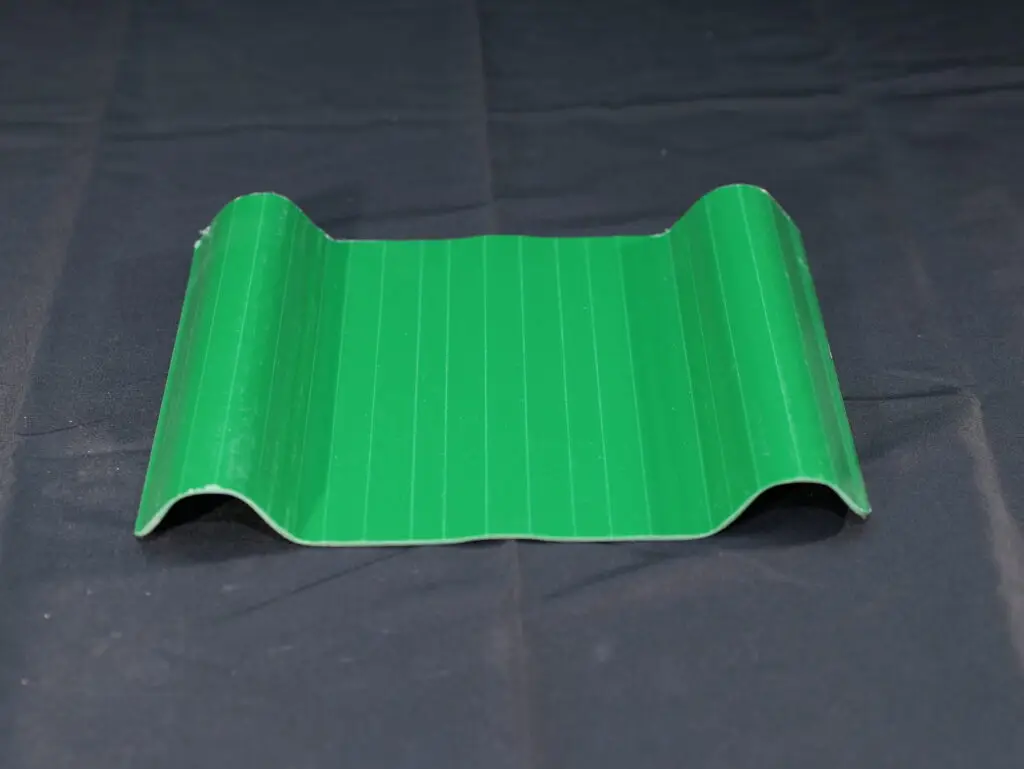
HESU PVC roofing sheets provide lightweight, non-metallic roof covering for farm buildings, storage shelters, workshops and canopies. Formed waves or ribs create drainage channels and sheet stiffness, while the PVC body avoids the rust associated with exposed steel.
The product range centers on profiled roof sheets, not flexible PVC membranes. Profile, thickness, cut length and surface construction define the finished product. Matching fasteners, washers and roof-line details complete the assembly.

Karina Su
Call: +86 15306896380
Profiles, Coverage and Sheet Options
Corrugated and ribbed profiles
Repeating waves or ribs give a PVC sheet its shape and drainage path. Rib spacing, profile depth and edge geometry determine how adjacent sheets overlap. Sheets with the same overall width can have different effective coverage.
Coverage that relates to the roof
Effective width is the installed width after the side lap. Where sheets join along the slope, the end lap reduces their effective length. These dimensions connect a profile drawing to the roof quantity calculation.
Illustrative calculation: a sheet with 1.0 m effective width and 4.0 m effective length covers 4.0 m². A 100 m² rectangular roof needs 25 sheets before cutting allowance. These example dimensions are not HESU product specifications.
Material and finish options
Thickness, cut length, color and surface construction vary by profile. An ASA roofing sheet adds an ASA weathering surface. The UPVC roofing sheet range identifies rigid, unplasticized PVC products. PVC roof sheets can themselves use rigid formulations; the label alone does not establish a stiffness ranking.
PVC Roofing Applications
Farm buildings and agricultural shelters
A non-metallic sheet avoids rust in the roof covering itself. Ventilation and condensation detailing remain important in humid livestock and agricultural buildings. Fasteners and supports require their own exposure-appropriate specification.
Storage roofs and workshops
Low sheet weight helps handling on straightforward pitched roofs. Profile geometry and support spacing work together to carry loads. Large openings and exposed roof edges affect the wind design and fixing layout.
Canopies and replacement roofs
Corrugated sheets suit simple roof forms with a clear drainage path. On replacement work, a level supporting frame helps side laps nest correctly without twisting the sheet.
The right product family for the roof
Profiled PVC sheets are distinct from transparent daylighting panels and low-slope membranes. The roofing sheet range separates these product families. Fire classification and load requirements relate to the exact roof assembly, not to the PVC name alone.
Sheet Details, Installation and Export Packing
Thickness and profile consistency
Sheet thickness, wave shape and edge condition influence fit at supports and side laps. A consistent profile lets adjacent sheets nest without forcing them together. The product drawing connects these details with the specified cut length and surface finish.
Fixing that allows thermal movement
PVC expands and contracts as roof temperature changes. Hole allowance, screw location, washer seating and tightening pressure therefore belong to one fixing detail. Overtightening can distort the profile or concentrate stress around a hole.
The PVC roofing sheet installation guide explains how overlaps, fasteners and thermal movement work together. Support spacing and overlap dimensions follow the selected sheet profile rather than generic metal-roof rules.
Protecting sheets during handling
Long sheets need even support in storage and transport. Concentrated straps can mark edges, while unsupported ends can bend. Packing arrangements need to protect sheet shape and keep accessory bundles identifiable through loading and unloading.
Project specifications and quotation
A HESU quotation relates to the selected profile, thickness, cut length, color and quantity. Accessories, packing and delivery terms define the remaining supply scope. Share the roof dimensions or sheet schedule with the inquiry so the product options and quotation use the same basis.
Request PVC Roofing Sheet Options
FAQ About PVC Roofing Sheet
Is PVC roofing sheet good for hot weather?
PVC roofing can be used in hot climates when the selected formulation, color, support spacing, ventilation, and fixing method suit the project. Heat causes plastic sheets to expand and contract, so installers must follow the profile-specific guidance for hole preparation, fasteners, overlaps, and movement allowance. Do not assume one PVC sheet performs the same as every other formulation.
What is the difference between PVC and UPVC roofing sheets?
UPVC means unplasticized PVC, a rigid formulation within the PVC family. The broader term PVC roofing sheet does not automatically mean flexible or plasticized sheet. Profile, thickness, formulation and layer construction determine the actual product differences.
What affects PVC roofing sheet price?
Formulation, thickness, profile, color, cut length and order quantity affect sheet price. Accessories, protective packing and delivery terms affect the total quotation. HESU pricing relates to a defined sheet specification and supply scope, rather than one price for every PVC roofing product.
How should corrugated PVC roofing sheets be installed?
Install corrugated PVC roofing sheets according to the exact profile guide. Confirm roof slope, purlin spacing, side and end overlaps, fastener position, sealing washers, hole allowance, thermal movement, flashing, and safe access. Avoid overtightening and do not transfer metal-roof fixing rules to PVC without product-specific approval.
Can PVC roofing sheets be used for warehouses and farm buildings?
They can suit warehouses, farm buildings, workshops, storage shelters, and canopies when the profile, support system, wind design, ventilation, and local requirements are appropriate. Buildings with strict fire, structural, occupancy, or approval requirements need project-specific evidence and may require another roofing system.