
Resin Roof Ridge Tile Manufacturer | HESU Roofing Accessories
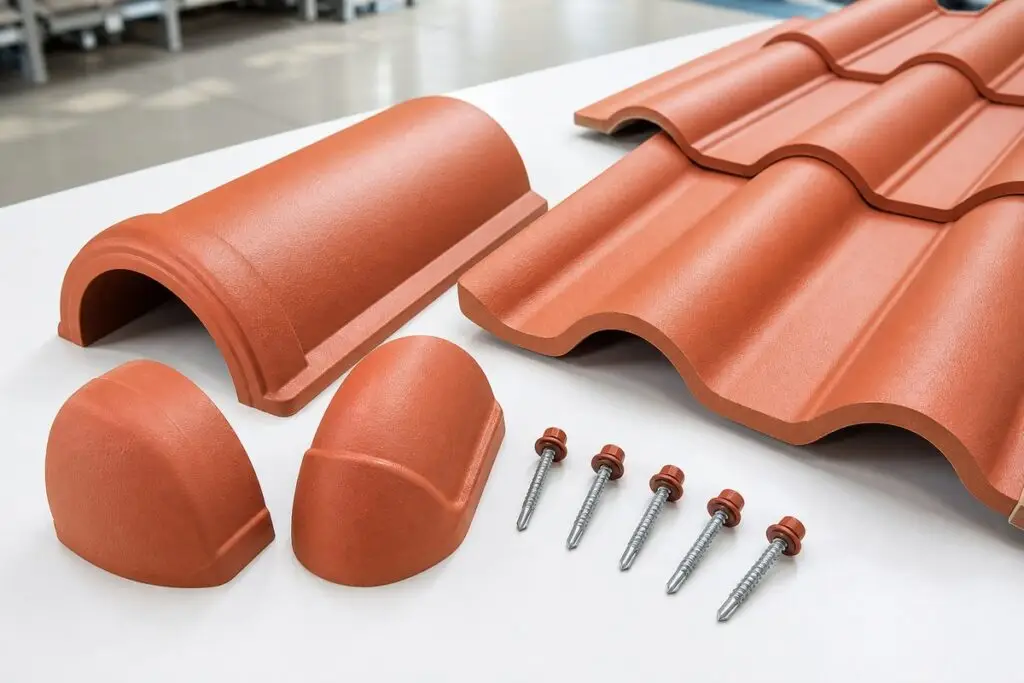
HESU manufactures resin roof ridge tiles and matching roofing accessories for synthetic resin roof tile systems.
Available components include straight ridge tiles, hip ridge tiles, ridge end pieces, 3-way roof ridge connectors and 4-way roof ridge connectors. Profiles, colors and surface finishes are matched to the selected main roof tile.
HESU supplies resin roof ridge tiles and matching roofing accessories for bulk orders, distributor stock, OEM requirements and construction projects. For accurate product matching, please provide the main roof tile model, roof drawing, required color, quantity and destination country.

Karina Su
Compatible Roofing Systems: Synthetic resin roof tiles and Spanish-style resin roof tiles
Available Components:Straight ridge, hip ridge, ridge end, 3-way and 4-way connectors
Customization: Matching colors, profiles and surface finishes
Supply Type: Wholesale, distributor and project supply
Resin Roof Ridge Tile Specifications
| Item | Available Specification |
|---|---|
| Product name | Resin Roof Ridge Tile |
| Product type | Straight ridge tile, hip ridge tile, ridge end tile, 3-way connector, 4-way connector |
| Material | Synthetic resin; exact formulation according to product model |
| Compatible roof tiles | HESU synthetic resin roof tiles and compatible Spanish-style roof tiles |
| Application | Horizontal roof ridge, diagonal hip, ridge junction and terminal point |
| Color | Red, grey, blue, green, brown, terracotta or customized |
| Surface finish | Smooth or embossed, according to the selected roofing system |
| Profile | Matched to the main roof tile model |
| Installation | Mechanical fixing to the supporting roof structure |
| Customization | Color, profile, dimensions, logo and packing subject to order requirements |
| Supply type | Wholesale, OEM, distributor and construction project supply |
| Packing | Export packing according to product shape and order quantity |
Main Resin Roof Ridge Tile Components
A resin roof ridge tile is a molded roofing accessory installed along the peak or hip of a sloped roof. Its profile must correspond with the main roof tile so that the ridge section overlaps correctly and maintains a consistent appearance.
HESU supplies ridge-line accessories as a coordinated system rather than isolated decorative parts. The required component depends on its position on the roof, the number of intersecting ridge lines, the roof pitch, and the selected main tile profile.
| Component | Product Name | Roof Position / Requirement |
|---|---|---|
| Ridge Tile | Resin Roof Ridge Tile | Horizontal roof peak where two roof slopes meet. |
| Hip Ridge Tile | Resin Hip Ridge Tile | Diagonal hip line where two roof slopes meet. |
| 3-Way Connector | 3-Way Roof Ridge Connector | Junction where three ridge or hip directions meet. |
| 4-Way Connector | 4-Way Roof Ridge Connector | Central junction where four ridge or hip directions meet. |
| Ridge End Tile | Hip Starter Tile / Ridge End Tile | Starting or terminal point of a ridge or hip line. |
| Profile Compatibility | Main Roof Tile Profile | Must match the selected main roof tile profile. |
| Drawing Confirmation | Project Drawing | Required for project-specific dimensions and junction details. |
| Order Matching | Complete Roofing System | Main roof tiles and accessories should be confirmed as one roofing system. |
Straight Resin Roof Ridge Tile
Installed along the horizontal peak where two sloped roof planes meet. It covers the upper joint and creates a continuous finished ridge line.
Best suited for: gable roofs, residential roofs, villas and other roofs with a straight horizontal peak.
Resin Hip Ridge Tile
Installed along a diagonal hip where two sloped roof planes meet at an external angle. Its alignment and overlap direction differ from those of a straight ridge tile.
Best suited for: hipped roofs, villas, pavilions and multi-slope roofing structures.
3-Way Roof Ridge Connector
Used at a junction where three ridge or hip directions meet. The connector must match the angles and profiles of all adjoining components.
Best suited for: T-shaped ridge intersections and selected multi-slope roof layouts.
4-Way Roof Ridge Connector
Used at the central apex where four sloping hip ridges meet. It is commonly required on symmetrical four-sided roofs.
Where Roof Ridge Tiles Are Used
For multi-slope roofs, the accessory layout should be confirmed from the roof drawing before production. This helps identify straight ridge length, hip ridge length, ridge end pieces and the required number of 3-way or 4-way junction components.
Spanish-style villa and residential roofs
Ridge tiles and hip tiles are highly visible on villas and houses. They define roof peaks, diagonal hips, and terminal details, so profile and color coordination directly affect the finished appearance.
Resorts, hotels, and multi-slope roofs
Large decorative roofs may combine straight ridge tiles, diagonal hip tiles, 3-way connectors, 4-way connectors, and ridge end tiles. The roof drawing should identify each ridge line and junction before the component layout is finalized.
Renovation and replacement roofs
Existing clay, metal, or cement ridge details rarely match a new synthetic resin tile profile without checking. Roof pitch, support condition, old edge details, and tile course alignment should be reviewed before installation.
Complete synthetic resin roof systems
A ridge component is only one part of the roof system. The main tile, side caps, end caps, screws, washers, overlaps, and flashing details must work together. For the complete accessory family, see Spanish roof tile accessories.
How Ridge-Line Components Complete the Roof System
1. They close visible ridge and hip lines
The ridge line is one of the most exposed visual details on a sloped roof. A matched resin roof ridge tile covers the joint between roof planes and creates a finished tile-style roof peak.
2. They keep the roof geometry consistent
Straight ridges, diagonal hips, three-way junctions, four-way junctions, and terminal ends use different component shapes. Selecting by roof geometry helps avoid forced cuts and mismatched transitions.
3. They protect profile matching and water-shedding logic
Wave spacing, step shape, overlap direction, and edge form determine how each ridge-line component sits against the main roof tile. A compatible part follows the same profile logic instead of interrupting the tile course.
4. They support cleaner installation planning
Ridge tiles, hip tiles, connectors, screws, washers, supports, and overlaps work as one installation system. Fastener position, washer compression, and local project requirements should follow the approved profile guidance.
Common Ridge Tile Matching Problems
Most ridge-tile installation problems are caused by profile mismatch rather than the ridge material itself.
If the wave spacing, edge shape or overlap geometry does not match the main roof tile, the ridge component may sit unevenly or require excessive cutting.
3-way and 4-way connectors also need to match the actual roof junction geometry. A connector designed for one roof layout may not align correctly with another.
For replacement projects, existing clay, metal or cement ridge components should not be assumed to fit a new synthetic resin roofing system.
Related HESU systems include ASA synthetic resin roof tile, synthetic Spanish roof tile, and Spanish roof tile accessories.
Wholesale and Project Supply
HESU supplies resin roof ridge tiles for roofing distributors, importers, contractors and construction projects. Ridge components can be ordered together with compatible main roof tiles to simplify product matching, loading and project coordination. Available services include:
- Wholesale and container orders
- Mixed roofing system supply
- Custom colors and profiles
- OEM or private-label packaging
- Project quantity calculation support
- Export packing and loading coordination
For project orders, HESU can review the roof plan before quotation to identify ridge lengths, hip lines, junction quantities and accessory combinations.
How to Estimate Resin Roof Ridge Tile Quantity
Straight ridge tile quantity is calculated from the total horizontal ridge length, while hip ridge tile quantity is calculated from the total diagonal hip length.
3-way and 4-way connectors are counted according to the number of roof junctions. Ridge end pieces are counted according to the number of exposed ridge or hip ends.
Because each component requires overlap, the effective installed length should be confirmed from the selected profile drawing rather than calculated only from nominal product length.
For complex roofs, a roof plan provides the most reliable basis for quantity calculation.
Resin Roof Ridge Tile Price Factors
Resin roof ridge tile prices depend on the component type, profile, dimensions, material structure, color, surface finish, order quantity, packaging and whether the accessories are supplied together with the main roof tiles.
Straight ridge tiles, hip ridge tiles, ridge end pieces, 3-way connectors and 4-way connectors use different molds and shapes, so they should not be compared only by price per piece.
For export orders, mixed loading with compatible roof tiles can also affect packing and container utilization.
Contact Us
To recommend the correct resin roof ridge tiles, please send:
- Main roof tile model or profile drawing
- Roof plan or installation drawing
- Straight ridge length
- Total hip ridge length
- Number of 3-way or 4-way junctions
- Number of ridge end pieces
- Required color
- Project country
- Estimated order quantity
- Required delivery time
If a roof drawing is unavailable, send clear photos and dimensions of the main tile and roof structure.
FAQ About Resin Roof Ridge Tiles
What are resin roof ridge tiles used for?
Resin roof ridge tiles finish roof peaks, hips, junctions, and end points in a synthetic resin roof tile system. They help cover visible roof-line joints and continue the tile profile across areas where ordinary roof sheets cannot meet cleanly.
What is the difference between a ridge tile and a hip tile?
A ridge tile usually runs along a horizontal roof peak. A hip tile follows a diagonal roof line where two sloped roof planes meet at an angle. Both must match the main tile profile, but their roof positions and alignment requirements are different.
What is a 3-way roof ridge connector?
A 3-way roof ridge connector is used where three ridge or hip directions meet. It is a junction component rather than a normal straight ridge tile. The connector geometry must align with each adjoining ridge or hip component.
What is a 4-way roof ridge connector?
A 4-way roof ridge connector is used at a central crossing where four ridge directions meet. It should be selected only when the roof geometry requires it and when the connector matches the surrounding ridge-line components.
What is a hip starter tile or ridge end tile?
A hip starter tile or ridge end tile finishes the starting or terminal point of a hip or ridge line. It helps close the exposed end detail and avoids an unfinished or improvised cut at a visible roof edge.