
Tuile de toit en résine synthétique ASA: Structure, Profiles and Roof-System Fit
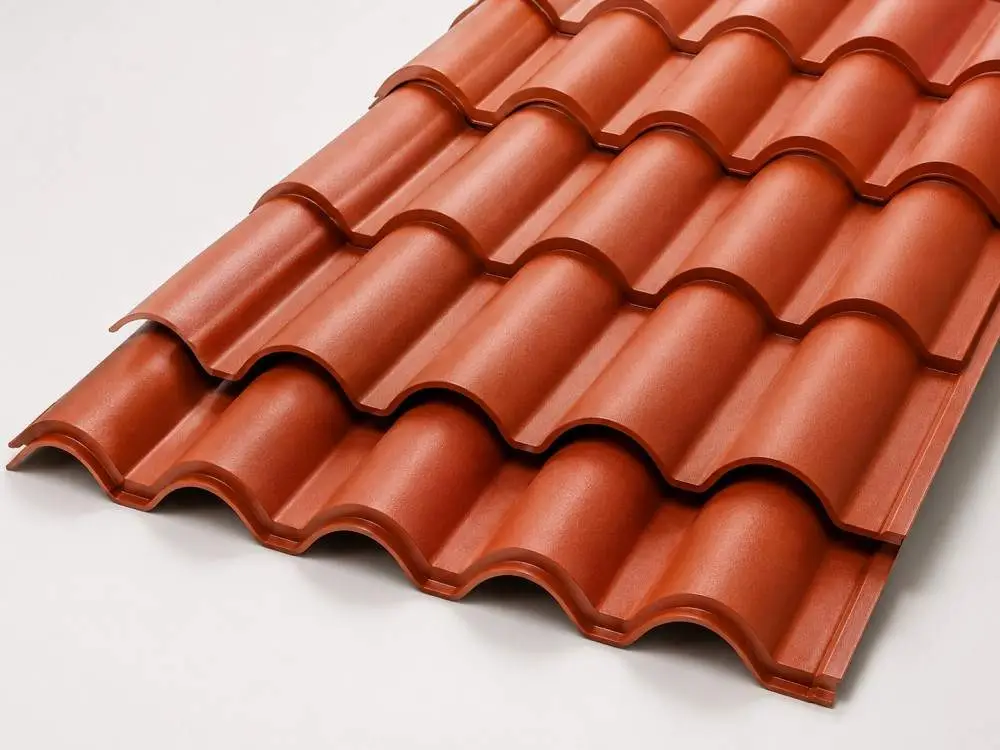
An ASA synthetic resin roof tile combines an exposed ASA weathering layer with a shaped resin or PVC-based body. The surface layer helps protect color and appearance from outdoor exposure, while the body forms the tile profile and carries installation loads between supports. Roof performance still depends on layer continuity, profile consistency, roof pitch, chevauchements, fixation, and compatible ridge and edge components. ASA resin tile systems can use several profiles. UN synthetic Spanish roof tile uses a curved architectural profile, while ASA roofing sheets include other shapes for different roof forms and drainage layouts.

Karina Su
Appel: +86 15306896380
ASA Resin Tile Profiles and System Components
- ASA Spanish roof tile: A curved, stepped profile for villas, maisons, stations balnéaires, and other roofs that need a traditional tile appearance. Its ridge, hip, side, and end details must match the selected Spanish roof tile profile.
- ASA Roman roof tile: A separate decorative wave profile for residential and architectural roofs. Roman and Spanish components should not be treated as interchangeable unless their drawings and contact surfaces match.
- ASA-PVC co-extruded roof tile: The ASA layer serves the exposed weathering side, while the PVC-based body provides the formed structural profile. Surface quality, liaison par couches, body formulation, and thickness consistency all affect the finished tile.
- Coordinated lengths, thicknesses, colors, and accessories: Available options depend on the selected profile. The main tile and the matching roof tile accessories should be confirmed as one system rather than selected by color alone.
Where ASA Synthetic Resin Roof Tiles Fit
ASA Synthetic Resin Roof Tile for Villas and Houses
- Tile-style profiles suit sloped residential roofs where appearance and lower roof-covering mass are relevant. The supporting structure, pitch, drainage path, and local design requirements still determine whether the system fits the building.
ASA Roof Tile for Resorts and Multi-Slope Roofs
- Decorative roofs often combine straight ridges, diagonal hips, vallées, jonctions murales, and apex connectors. Mapping these roof lines before installation helps identify the correct main tiles and junction pieces.
ASA Roofing for Coastal and Humid Buildings
- The non-metallic tile body does not rust, but the complete roof also includes fasteners, rondelles, flashings, and supports. Those components still need materials and detailing suited to salt, humidité, précipitations, and local exposure.
ASA Resin Roof Tile for Renovation
- A resin tile system can reduce roof-covering mass compared with many clay assemblies, but it does not remove the need to inspect the existing structure. Support spacing, deck condition, drainage, flashing transitions, and old roof geometry must remain compatible with the selected profile.
What Controls ASA Resin Roof Tile Performance?
1. ASA Surface-Layer Continuity and Bonding
The ASA layer protects the exposed face from sunlight and weathering, but its name alone does not establish roof performance. Surface-layer continuity, thickness control, color formulation, bonding to the body, and handling damage all influence how evenly the tile ages. Project-specific weathering claims require matching test or product records.
2. Body Structure and Profile Consistency
The resin or PVC-based body forms the waves, steps, side laps, and bearing areas that connect one tile to the next. Uneven thickness or profile distortion can change contact at supports and accessories. Main tiles, ridge pieces, and edge components should therefore be checked against the same profile drawing.
3. Roof Pitch, Overlaps and Installed Coverage
Total tile width is not the same as installed coverage because side laps and end laps consume part of each unit. Roof pitch, water path, prevailing exposure, espacement des supports, and the selected profile determine the approved overlap arrangement. Universal overlap or purlin dimensions should not be transferred from another tile shape.
4. Fastening and Roof-Line Accessories
Fastener position, hole preparation, washer seating, tightening pressure, and allowance for temperature movement affect cracking and leakage risk. Ridge and hip runs must finish with profile-compatible components. UN 3-way roof ridge connector serves a ridge-to-hip junction, while a 4-way ridge tile belongs at an apex where four hips meet.
Contactez-nous
FAQ About ASA Synthetic Resin Roof Tiles
What is an ASA synthetic resin roof tile made of?
An ASA synthetic resin roof tile normally has an exposed ASA weathering layer bonded to a formed resin or PVC-based body. The ASA layer addresses surface weathering and color stability; the body provides the profile, overlap geometry, and support contact. Layer count, épaisseur, and formulation vary by product series and selected tile profile.
How is an ASA resin roof tile different from an ordinary PVC roof tile?
An ASA-faced tile adds a dedicated weathering surface above the structural body. An ordinary PVC roof tile may rely on its PVC formulation and stabilizers without that ASA face. The practical difference depends on ASA-layer quality, liaison, body formulation, thickness control, exposure, et mise en place, so the material name alone does not prove a universal service life.
Is every ASA synthetic resin roof tile a Spanish roof tile?
Non. UN synthetic Spanish roof tile is one profile within the broader ASA resin tile family. Other molded profiles can use a similar ASA-and-resin structure but have different waves, steps, chevauchements, and accessories. The Spanish profile fits roof designs that specifically require its curved appearance and matching geometry.
What installation details control ASA resin roof tile fit?
Installation must follow the selected profile guidance. Check roof pitch, purlin or batten spacing, side and end overlaps, couverture efficace, fastener position, washer seating, hole allowance, temperature movement, clignotant, and drainage. Do not copy dimensions from a different profile or pull a distorted tile into place by overtightening screws.
Which accessories must match an ASA resin roof tile?
Straight ridge tiles, hip tiles, side and end pieces, attaches, and junction connectors must match the main tile profile. Roof geometry decides whether a junction needs a straight ridge, a 3-way connector, or a 4-way apex component. A coordinated resin roof tile accessory system keeps roof-line shapes, chevauchements, and contact surfaces compatible.