Maison » Types de feuilles de toiture » Feuille de toiture ASA

ASA Roofing Sheet Profiles, Structure and Applications

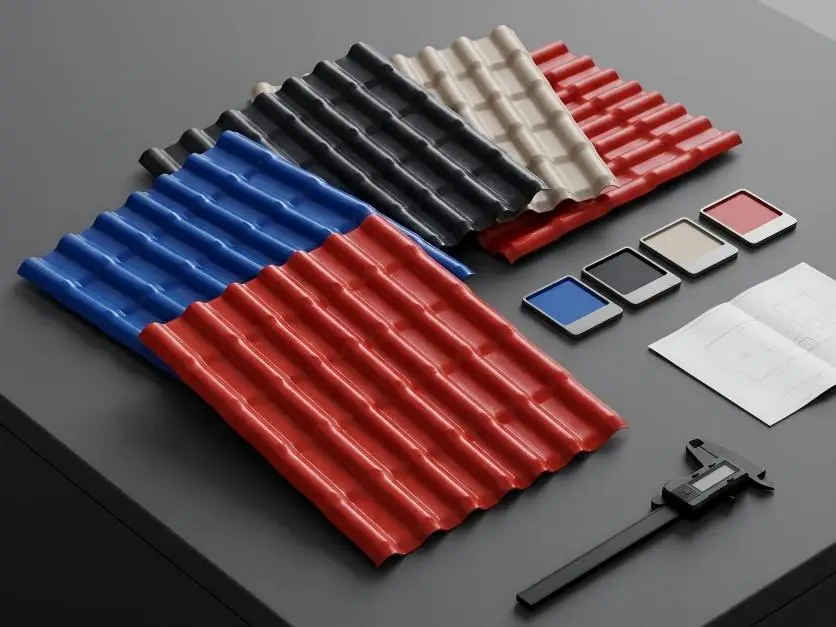
ASA roofing sheet samples in red blue black and beige profiles with color swatches
Karina Su

Karina Su

PDG d'HESU
Share the required roof profile, application environment, and available roof drawing. HESU can help identify compatible ASA roofing sheet and accessory options.

Technical contact: +86 15306896380

Un Feuille de toiture ASA is a profiled plastic roof panel that uses ASA weather-resistant resin on the exposed surface. The ASA layer helps protect the roof surface from sunlight, outdoor weathering, and premature color change, while the structural body and profile geometry provide sheet rigidity. Within HESU’s types de feuilles de toiture, ASA profiles are intended for residential, industriel, agricultural, côtier, and selected renovation applications.

ASA Roofing Sheet Structure and Profile Specifications

Diagram of a tile-style ASA roofing system with ridge edge and connector accessories

ASA, or acrylonitrile styrene acrylate, functions as the exposed weathering layer rather than the entire roofing sheet. In a co-extruded system, the ASA surface supports outdoor weather resistance, while the underlying resin body supplies thickness, profile stability, and mechanical support. The layers must remain compatible and evenly bonded across the finished panel. ASA roofing sheet is also a product-family term rather than one tile shape. Projects requiring a traditional curved profile should review the Tuile en résine synthétique ASA separately.

Largeur
Largeur efficace
Épaisseur
Longueur d'onde
Hauteur des vagues
Poids
1050mm
960mm
Confirm selected profile
220mm
30mm
Varies by thickness

The dimensions above apply only to the illustrated profile. Total width and effective coverage differ because adjacent sheets overlap during installation, while sheet weight varies with thickness and material structure. Final roof calculations should use the current production drawing for the selected profile rather than applying one set of dimensions to every ASA roofing sheet.

How ASA Surface, Profile and Installation Work Together

ASA roofing performance depends on the surface layer, corps structurel, profile geometry, and installation conditions working as one roof system:

  1. Weathering surface:The ASA layer is intended to improve resistance to sunlight, pluie, humidité, and outdoor color change. Actual performance depends on the ASA material, système pigmentaire, surface consistency, contrôle de production, and exposure conditions.
  2. Structural profile:Thickness alone does not determine roof performance. Wave geometry, couverture efficace, espacement des supports, overlap direction, and fastener placement also affect handling strength and water drainage. Le ASA vs PVC roofing sheet comparison explains how surface and body materials differ.
  3. Corrosion environment:The non-metallic sheet body does not rust like steel, which can make ASA roofing relevant to humid, côtier, agricultural, and selected industrial environments. Attaches, flashings, and accessories must still suit the same exposure conditions.
  4. Thermal and acoustic behavior:Resin sheets respond differently from thin metal panels, but an ASA roofing sheet is not automatically an insulated roof assembly. Indoor temperature and rain-noise performance also depend on ventilation, ceiling layers, insulation, roof color, and building design.

ASA Roofing Sheet Colors and Surface Appearance

ASA roofing sheet color samples in red grey blue and green surface finishes

ASA Roofing Sheet Profiles for Different Roof Designs

Synthetic resin roof tile drawing with 1050 mm total width 960 mm coverage and matching accessories
Red ASA synthetic resin roof tiles installed on a pitched building roof

Where ASA Roofing Sheets Fit Best

ASA roofing sheets fit several roof types when the selected profile, disposition de support, and accessories match the application:
  • Residential homes and villas: Tile-style ASA profiles can support projects where roof appearance, lower roof weight, and coordinated ridge accessories are important.
  • Industrial and agricultural buildings: Corrugated or profiled sheets may suit workshops, entrepôts, livestock buildings, and structures exposed to humidity or corrosive conditions. Ventilation, chemical compatibility, and fastener selection still require project review.
  • Coastal and humid environments: The non-rusting sheet body can reduce the corrosion risk associated with exposed metal panels. Screws, rondelles, flashings, and edge details must also be compatible with the environment.
  • Renovation roofs: Lower sheet weight may help where an existing structure has limited reserve capacity, but the deck, drainage, loading, attachment points, and local requirements must be checked before overlay installation.

What Controls ASA Roofing Sheet Performance?

Reliable ASA roofing performance depends on the complete material and roof system rather than one headline claim. Important variables include ASA surface consistency, bonding between layers, structural-body formulation, profile geometry, sheet thickness, couverture efficace, and production tolerances.

Installation variables are equally important. Support spacing, fixing-hole allowance, thermal movement, position de la vis, rondelles d'étanchéité, ridge details, and side or end laps can affect cracking, déformation, leakage, and long-term appearance. Fire classification, accelerated weathering, impact resistance, warranty coverage, and expected service life should only be stated when current evidence identifies the same product, épaisseur, test method, and result.

  • Tous
  • Information
  • Nouvelles

Contactez-nous

    Obtenez un devis gratuit en 24 Heures

    E-mail*:

    Nom*:

    Votre pays:

    Tél*:

    Vos exigences*:

    FAQ About ASA Roofing Sheets

    What thickness options are available for ASA roofing sheets?

    Available thickness depends on the selected ASA roofing profile and current production drawing. Thickness must be read together with profile geometry, couverture efficace, espacement des supports, and application conditions; it should not be used as the only indicator of roof strength.

    Service life depends on ASA surface quality, liaison par couches, structural formulation, orientation du toit, UV exposure, temperature, espacement des supports, fixation, chemical exposure, and maintenance. A universal lifespan should not be stated without product-specific evidence and defined warranty conditions.

    The resin-based sheet body does not rust, making ASA roofing relevant to humid and salt-air environments. Coastal or industrial performance also depends on corrosion-resistant fasteners, rondelles, flashings, support materials, correct overlaps, and compatibility with the chemicals present at the site.

    Fire performance must be confirmed from a current test report for the same sheet structure and thickness. The applicable classification, test method, installation assembly, and local building requirements should be identified before any fire-resistance claim is applied to a project.

    ASA roofing sheets may be considered for some renovation roofs, but direct installation over an existing roof is not automatically suitable. The existing structure, deck condition, drainage, pente du toit, attachment points, additional load, and local requirements must be checked before an overlay system is specified.