
Fabricant de tôles de toiture UPVC pour toits industriels et agricoles
La feuille de toiture UPVC est rigide, revêtement de toit en plastique profilé utilisé en cas de corrosion, humidité, et une exposition répétée à des environnements agricoles ou industriels rend le métal non revêtu difficile à entretenir.. Les produits disponibles incluent des feuilles de toiture ondulées UPVC, panneaux de toiture UPVC creux à double couche et feuilles de toiture UPVC enduites d'ASA dans des longueurs personnalisées, couleurs et profils. Les performances dépendent de la structure de la feuille, géométrie du profil, pente du toit, espacement des supports, tours latéraux et finaux, pression de fixation, et tolérance au mouvement thermique.

Karina Su
Appel: +86 15306896380
Types de feuilles de toiture UPVC
Feuille de toiture UPVC enduite d'ASA
Les feuilles de toiture UPVC enduites d'ASA combinent une couche structurelle rigide en UPVC avec une surface ASA exposée résistante aux intempéries. Cette structure est utilisée là où une stabilité améliorée des couleurs extérieures et une résistance à la lumière solaire prolongée sont nécessaires..
Feuille de toiture UPVC creuse double couche T940
Les tôles de toiture UPVC creuses à double couche contiennent des espaces d'air internes qui influencent le transfert de chaleur et le comportement au bruit de la pluie.. Ils conviennent aux projets nécessitant une structure de panneau plus importante qu'une tôle ondulée monocouche conventionnelle..
Feuille de toiture ondulée UPVC T1130
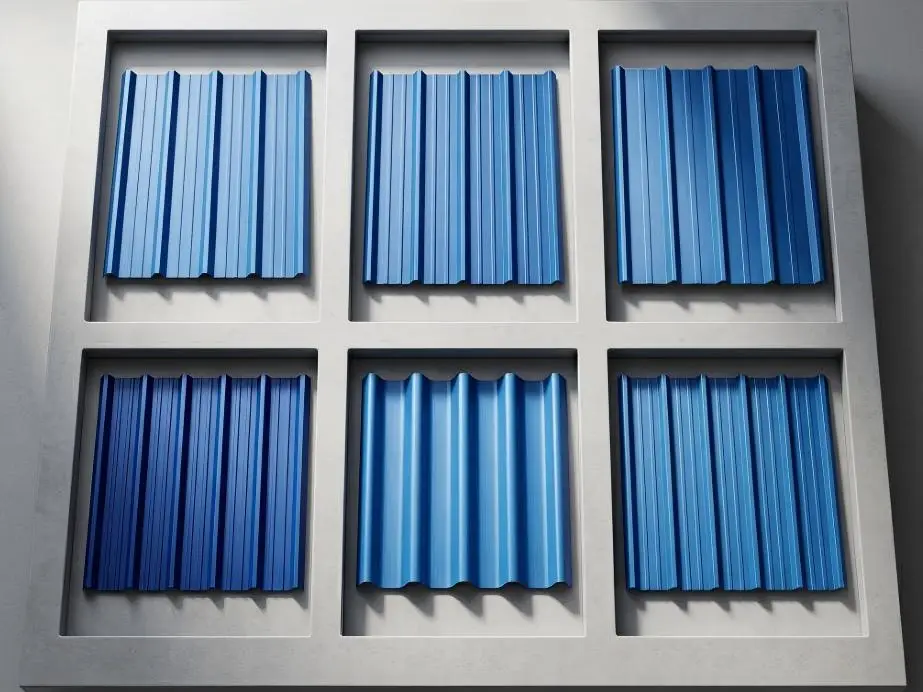
Les tôles de toiture ondulées UPVC utilisent une structure ondulée profilée conçue pour le drainage du toit, stabilité longitudinale et chevauchement efficace.
Profils de tôle de toiture UPVC et structures matérielles
| Spécification | Feuille ondulée UPVC | Feuille UPVC creuse | Feuille UPVC enduite d'ASA |
|---|---|---|---|
| Profil typique | T1130 ondulé | T940 creux | Ondulé, tuile ou romaine |
| Largeur efficace | 1130 mm | 940 mm | Selon profil |
| Épaisseur | 1.5–3,0 mm | 6–12mm | Selon structure |
| Longueur | Personnalisé | Personnalisé | Personnalisé |
| Couleur | Options personnalisées | Options personnalisées | Options personnalisées |
| Couche superficielle | PVC | PVC | Surface résistante aux intempéries ASA |
| Utilisation typique | Usine, ferme, entrepôt | Usine, entrepôt, toits commerciaux sélectionnés | Résidentiel, projets commerciaux et à UV élevé |
- Feuille de toiture ondulée UPVC (Profil T1130): 1130mm largeur efficace avec options d'épaisseur répertoriées de 1,5 mm à 3 mm. Le profil ondulé répétitif favorise le drainage et la stabilité du profil dans les ateliers, entrepôts, et toitures agricoles.
- Feuille de toiture UPVC creuse double couche (Profil T940): 940mm largeur efficace avec options d'épaisseur répertoriées de 6 mm à 12 mm. Son espace d'air interne modifie son comportement thermique et sonore, mais la pente du toit et la disposition des supports contrôlent toujours le résultat installé.
- Feuille de toiture UPVC enduite d'ASA: Une surface résistante aux intempéries ASA peut être combinée avec des couches structurelles UPVC pour les carreaux, romain, ou profils plats. Les déclarations de couleur et de vieillissement doivent suivre la couche de surface sélectionnée et ses spécifications de produit vérifiées..
Où les feuilles de toiture UPVC conviennent le mieux
Feuille de toiture UPVC pour ateliers industriels
- Les profilés ondulés rigides conviennent aux toitures qui nécessitent des canaux de drainage définis et une résistance à l'air humide ou corrosif.. La compatibilité chimique dépend toujours de la concentration, température, délai d'exposition, et les attaches métalliques utilisées avec la tôle.
Feuille de toiture UPVC pour ferme & Bâtiments d'entrepôt
- Humidité du bétail, ammoniac, matériaux stockés, et la condensation rendent la ventilation et le choix des fixations aussi importants que le corps de la feuille. Le toit a besoin d'une pente appropriée, espacement des supports, et un chemin de drainage clair.
Feuille de toiture UPVC pour bâtiments côtiers
- Le corps en tôle UPVC ne rouille pas, mais des vis, rondelles, pannes, clignotant, et l'eau stagnante reste exposée au sel et à l'humidité. Voir le Guide d'application côtière des feuilles de toiture UPVC pour la logique complète du système de toiture.
Feuille de toiture UPVC pour les projets de rénovation de toiture
- Un poids de feuille inférieur peut réduire la charge supplémentaire sur le toit, mais le cadre existant, état des pannes, pente du toit, et le tracé des canalisations doit encore être vérifié. Comparez le plus large types de feuilles de toiture avant d'affecter un article à la structure existante.
Qu'est-ce qui contrôle les performances du toit UPVC?
1. Conditions matérielles et de corrosion
Le corps en tôle UPVC ne rouille pas comme l'acier exposé. Son adéquation dans l'air industriel dépend toujours du type chimique, concentration, température, temps de contact, et conditions de nettoyage.
Les composants métalliques font toujours partie du système de toiture. Vis, rondelles, pannes, et les solins nécessitent des matériaux adaptés à la même exposition. Cette vue du système est particulièrement importante dans toiture côtière UPVC.
2. Structure de la feuille et mouvement de chaleur
L'UPVC a un comportement thermique différent de celui du métal, mais une feuille de plastique à elle seule ne peut pas être décrite comme une isolation complète du toit.. Les profils creux ajoutent des espaces d'air internes, tandis que les profilés ondulés simples dépendent davantage de la ventilation et du bâtiment situé en dessous..
Le PVC et l'UPVC se déplacent à mesure que la température change. Les feuilles longues accumulent plus de mouvement, donc allocation de trou, pression de laveuse, longueur de la feuille, et les obstructions au niveau des murs ou des crêtes doivent être coordonnées. Le Feuille de toiture PVC vs UPVC le guide explique la différence matérielle.
3. Stabilité du profil et exposition aux intempéries
Épaisseur, formulation, profondeur du profil, et l'espacement des supports travaillent ensemble. Une valeur d'impact ou de charge s'applique uniquement au profil de tôle testé et à l'état de support; il ne doit pas être traité comme une valeur universelle pour chaque panneau UPVC.
Exposition aux UV, orientation du toit, couleur, couche superficielle, drainage, et l'entretien affecte l'apparence au fil du temps. Les profilés revêtus d'ASA doivent être identifiés séparément de l'UPVC standard car la structure de la surface exposée est différente.
4. Détails d'installation qui protègent la feuille
Le dessin de profil approuvé doit contrôler la couverture effective, tour latéral, tour de fin, pente du toit, et disposition des pannes. Un profil d'apparence similaire peut produire un mauvais tour si la hauteur de la couronne ou l'espacement des vagues diffère.
Les fixations doivent sceller le toit sans écraser le profilé ni bloquer le mouvement thermique. Pré-perçage propre, rondelles compatibles, alignement droit des vis, et matière de serrage contrôlée pour l'UPVC et Feuilles de toiture en PVC.
Qu'est-ce qui détermine les prix des feuilles de toiture UPVC?
Les prix des tôles de toiture UPVC dépendent du profil sélectionné, structure de la feuille, épaisseur, longueur, couche superficielle, couleur, quantité commandée, emballage et destination.
Une tôle ondulée monocouche, un panneau creux double couche et une tôle de toiture UPVC enduite d'ASA utilisent des structures de matériaux différentes et ne doivent pas être comparés uniquement par le prix par tôle. La largeur de couverture effective et le prix au mètre carré doivent également être pris en compte.
Pour un devis précis, les acheteurs doivent fournir le profil requis, épaisseur, longueur de la feuille, superficie totale du toit ou quantité, couleur, accessoires et port de destination.
FAQ sur les feuilles de toiture UPVC
De quoi est faite la tôle de toiture UPVC?
UPVC signifie chlorure de polyvinyle non plastifié. Les formulations de toiture combinent la structure en vinyle rigide avec des stabilisateurs, pigments, auxiliaires technologiques, et d'autres modificateurs sélectionnés pour le profil et l'exposition. Une feuille UPVC enduite d'ASA ajoute une surface d'altération distincte au-dessus de la couche structurelle UPVC.
Quelle est la différence entre les tôles de toiture en PVC et UPVC?
Les feuilles de toiture en PVC sont généralement formulées pour plus de flexibilité lors de la manipulation et du formage.. UPVC utilise une structure plus rigide qui prend en charge la stabilité du profil. Les deux matériaux nécessitent encore une pente de toit adaptée., espacement des supports, chevaucher, pression de fixation, et tolérance au mouvement thermique. Voir le Comparaison des feuilles de toiture PVC et UPVC.
Les tôles de toiture UPVC conviennent-elles aux zones côtières?
Ils peuvent convenir lorsque le système de toiture complet traite du sel, humidité, drainage, et condensation. Le corps en tôle ne rouille pas, mais des vis, rondelles, pannes, clignotant, et d'autres pièces métalliques ont toujours besoin d'une résistance à la corrosion compatible. Lire le guide de toiture côtière UPVC.
Qu'est-ce qui contrôle le chevauchement et l'espacement des pannes pour les tôles de toit UPVC?
Le dessin de profil sélectionné, épaisseur de la feuille, pente du toit, longueur d'évacuation, conditions de vent, et le matériau de support contrôle ces dimensions. Les recouvrements latéraux doivent correspondre à la géométrie du profil, tandis que les derniers tours doivent atterrir sur un support approprié. Une valeur universelle d’espacement ou de chevauchement ne doit pas être appliquée à chaque feuille UPVC.
Combien de temps peut durer une tôle de toiture UPVC?
Il n'existe pas de numéro de durée de vie unique pour chaque tôle de toiture UPVC.. Formulation, épaisseur, couche superficielle, Exposition aux UV, pente du toit, espacement des supports, attaches, drainage, et l'entretien affectent tous le résultat. Une durée de vie ou une garantie spécifique doit être liée aux spécifications du produit sélectionné et à ses conditions énoncées..