Corrugated Polycarbonate Roofing Sheets for Roof Daylighting
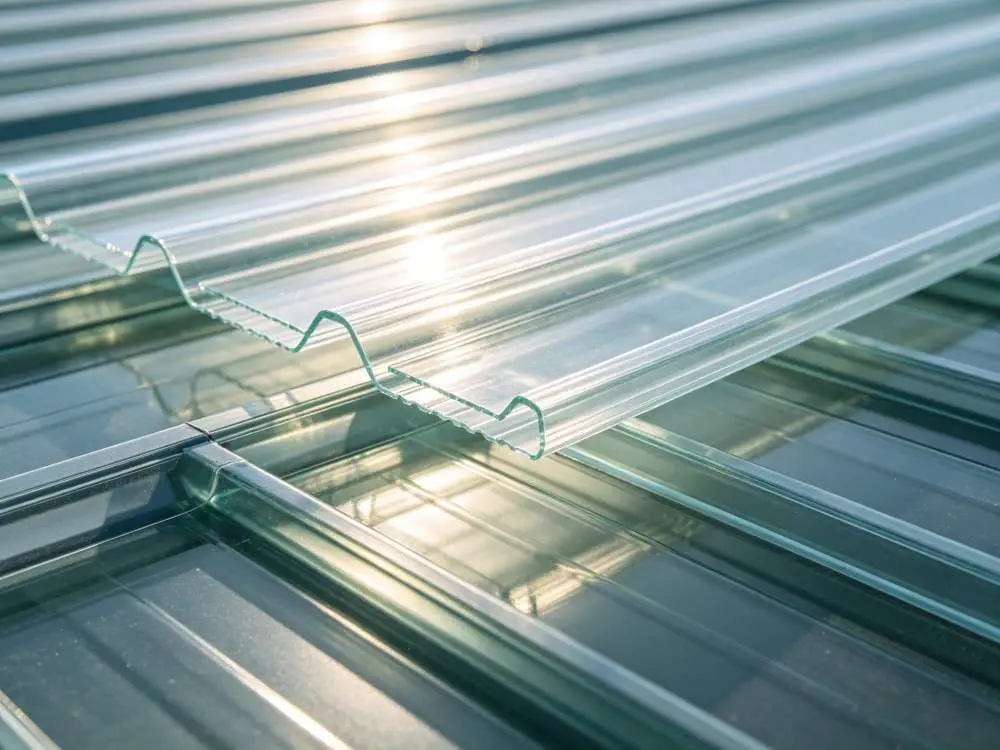
HESU corrugated polycarbonate roofing sheetsare lightweight, transparent or translucent roof panels designed to introduce natural daylight into industrial, kommerziell, agricultural and residential buildings. They can be used as complete roofing panels or as daylighting strips integrated with compatible metal, PVC or UPVC roofing profiles.
Clear, Blau, Grün, Bronze, opal and customized colors are available. Sheet thickness, Länge, effective width and corrugated profile can be selected according to the roofing system and project requirements. UV-protected options are available for outdoor roof applications.
For accurate profile matching, please provide the existing roofing sheet drawing, wave dimensions, required thickness, Farbe, length and quantity.

Karina Su
Anruf: +86 15306896380
Corrugated Polycarbonate Roofing Sheet Specifications
| Artikel | Verfügbare Spezifikation |
|---|---|
| Produktname | Corrugated Polycarbonate Roofing Sheet |
| Material | Polycarbonate resin |
| Struktur | Single-skin corrugated sheet |
| Surface options | Clear, tinted, opal or diffused |
| Available colors | Clear, Blau, Grün, Bronze, grau, opal or customized |
| Dicke | According to product model and project requirements |
| Länge | Standard or customized |
| Profil | Gewellt, trapezoidal or profile-matched design |
| Effektive Breite | According to selected profile |
| UV protection | Single-side or specified UV-protected option |
| Anwendung | Roof daylighting, canopy, Lager, Bauernhof, greenhouse and walkway |
| Installation | Mechanical fixing with compatible screws and sealing washers |
| Anpassung | Profil, Dicke, Farbe, Länge, transparency and packing |
| Versorgungsart | Großhandel, OEM, Vertriebs- und Projektversorgung |
| Verpackung | Protective film and export packaging according to order requirements |
Where Corrugated Polycarbonate Fits in the Roofing Sheet Range
This product belongs in Types of Roofing Sheet → PC / Polycarbonate Roofing Sheet → Corrugated Polycarbonate Roofing Sheets. The distinction is structural, not a minor specification difference.
| PC sheet type | Physical structure | Typical roof role |
|---|---|---|
| Corrugated polycarbonate | Single profiled skin with repeating crowns and valleys | Roof lights, Vordächer, agricultural roofs, and profile-matched daylight strips |
| Solid polycarbonate | Flat compact sheet | Glazing, curved canopies, Oberlichter, and protective transparent panels |
| Multiwall polycarbonate | Internal cells between multiple skins | Roofs where daylight and improved thermal separation are both important |
The existing PC roofing sheet page remains the product-family overview. This page owns the corrugated profile intent.
Which Roof Applications Benefit from a Corrugated PC Profile?
Profile-matched daylight strips
A clear corrugated sheet can interrupt an opaque metal or plastic roof to introduce natural light. Successful integration depends on matching wave pitch, crown height, valley shape, and effective coverage width.
Canopies and covered walkways
Single-skin corrugated panels keep the roof visually light and provide direct drainage channels. Clear, tinted, opal, or diffusing surfaces change glare and daylight distribution, so appearance must be considered together with exposure.
Agricultural and light commercial roofs
Corrugated PC panels can support daylighting in sheds, selected greenhouse structures, and work areas. Stützabstand, Dachneigung, Belüftung, and interior heat conditions determine whether a single corrugated sheet or a different PC structure is more suitable.
Material-family coordination
Polycarbonate should not be presented as interchangeable with PVC-Dachbahnen or UPVC-Dachbahnen. Similar-looking profiles can behave differently under impact, Hitze, light exposure, and fastening pressure.
What Controls Fit and Long-Term Roof Performance?
Profile geometry controls the side lap
A sheet that looks close to the adjoining roof profile can still bridge over a crown or lift at a valley. Matching the full profile drawing is more reliable than comparing only nominal sheet width.
UV orientation must be confirmed before fixing
The protected face should point toward weather exposure. Printed film or manufacturer markings identify orientation and should stay in place until the sheet position has been checked.
End laps need support and drainage logic
End laps should align with a suitable support position. Roof pitch and exposure influence how water moves across the overlap, so a single universal lap dimension would be misleading.
Fasteners must seal without locking the sheet
Compatible screws and washers manage water at penetrations, but excessive pressure can distort the crown. Hole allowance and fixing details must accommodate thermal expansion along the panel length.
Handling affects visible quality
Dragging sheets, removing protective film too early, or stacking panels where heat builds can mark the surface. Clean cutting, stable storage, and consistent extrusion quality matter on a roof where transmitted light makes defects easier to see.
Kontaktieren Sie uns
FAQ About Corrugated Polycarbonate Roofing Sheets
What are corrugated polycarbonate sheets used for?
Corrugated polycarbonate sheets are used where a profiled roof also needs daylight. Typical positions include roof-light strips, Vordächer, Gehwege, agricultural roofs, and selected greenhouse or light commercial structures.
How are corrugated polycarbonate roofing sheets different from PVC roof sheets?
Polycarbonate is commonly selected for light transmission and impact performance, while opaque PVC or UPVC sheets are normally used as the main weathering surface. Their profiles can look similar, but the material behavior and compatible fixing details are not interchangeable.
Can polycarbonate sheets match corrugated metal roofing?
They can when the wave pitch, crown height, valley shape, and effective cover width match the adjoining metal profile. A visual resemblance is not enough because small profile differences can prevent the side lap from seating correctly.
Should clear or tinted polycarbonate roofing be used?
Clear sheets admit more visible light, while tinted, opal, or diffusing surfaces can reduce glare and redistribute daylight. The correct option depends on the interior light target, heat exposure, and the building use.
Which side of a polycarbonate roofing sheet faces upward?
The UV-protected side identified by the manufacturer should face the weather. Protective film markings and installation labels should remain readable until the sheet orientation has been confirmed.