
PVC Roofing Sheets for Farm and Workshop Roofs
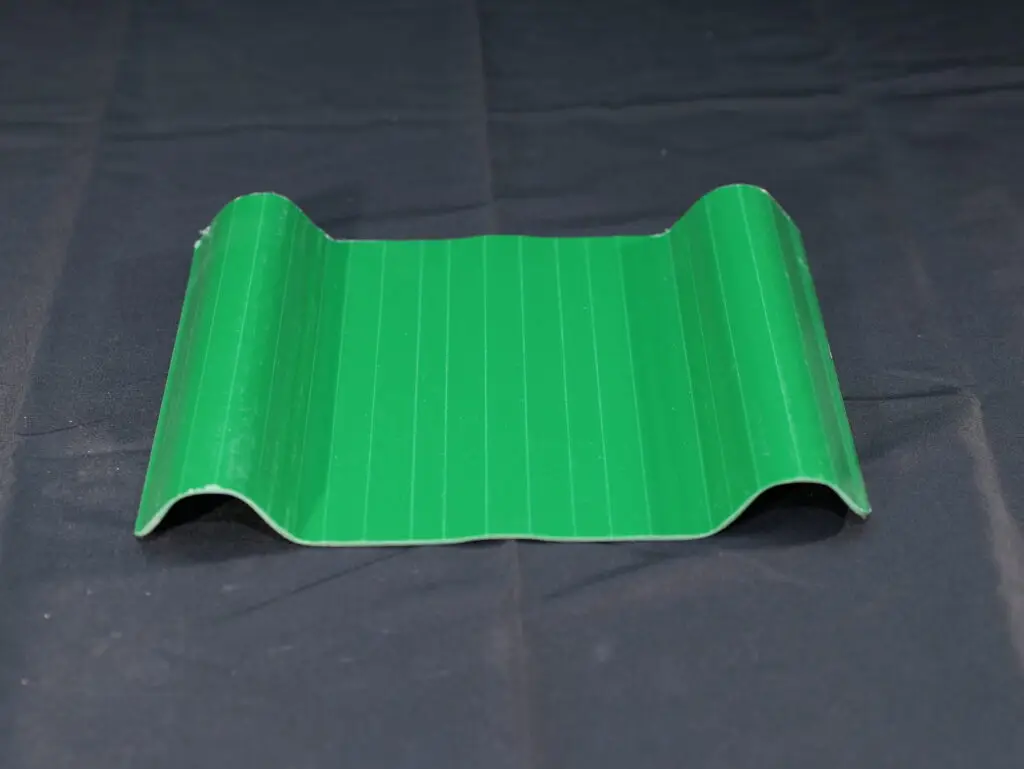
HESU PVC roofing sheets provide lightweight, non-metallic roof covering for farm buildings, Lagerunterstände, Werkstätten und Vordächer. Formed waves or ribs create drainage channels and sheet stiffness, while the PVC body avoids the rust associated with exposed steel.
The product range centers on profiled roof sheets, not flexible PVC membranes. Profil, Dicke, cut length and surface construction define the finished product. Matching fasteners, washers and roof-line details complete the assembly.

Karina Su
Anruf: +86 15306896380
Profile, Coverage and Sheet Options
Corrugated and ribbed profiles
Repeating waves or ribs give a PVC sheet its shape and drainage path. Rippenabstand, profile depth and edge geometry determine how adjacent sheets overlap. Sheets with the same overall width can have different effective coverage.
Coverage that relates to the roof
Effective width is the installed width after the side lap. Where sheets join along the slope, the end lap reduces their effective length. These dimensions connect a profile drawing to the roof quantity calculation.
Illustrative calculation: a sheet with 1.0 m effective width and 4.0 m effective length covers 4.0 m². A 100 m² rectangular roof needs 25 sheets before cutting allowance. These example dimensions are not HESU product specifications.
Material and finish options
Dicke, Schnittlänge, color and surface construction vary by profile. Ein ASA-Dachbahn adds an ASA weathering surface. Der Sortiment an UPVC-Dachbahnen identifies rigid, unplasticized PVC products. PVC roof sheets can themselves use rigid formulations; the label alone does not establish a stiffness ranking.
PVC Roofing Applications
Farm buildings and agricultural shelters
A non-metallic sheet avoids rust in the roof covering itself. Ventilation and condensation detailing remain important in humid livestock and agricultural buildings. Fasteners and supports require their own exposure-appropriate specification.
Storage roofs and workshops
Low sheet weight helps handling on straightforward pitched roofs. Profile geometry and support spacing work together to carry loads. Large openings and exposed roof edges affect the wind design and fixing layout.
Canopies and replacement roofs
Corrugated sheets suit simple roof forms with a clear drainage path. On replacement work, a level supporting frame helps side laps nest correctly without twisting the sheet.
The right product family for the roof
Profiled PVC sheets are distinct from transparent daylighting panels and low-slope membranes. Der roofing sheet range separates these product families. Fire classification and load requirements relate to the exact roof assembly, not to the PVC name alone.
Sheet Details, Installation and Export Packing
Thickness and profile consistency
Blechdicke, wave shape and edge condition influence fit at supports and side laps. A consistent profile lets adjacent sheets nest without forcing them together. The product drawing connects these details with the specified cut length and surface finish.
Fixing that allows thermal movement
PVC dehnt sich aus und zieht sich zusammen, wenn sich die Dachtemperatur ändert. Hole allowance, screw location, washer seating and tightening pressure therefore belong to one fixing detail. Overtightening can distort the profile or concentrate stress around a hole.
Der Installationsanleitung für PVC-Dachbahnen explains how overlaps, fasteners and thermal movement work together. Support spacing and overlap dimensions follow the selected sheet profile rather than generic metal-roof rules.
Protecting sheets during handling
Long sheets need even support in storage and transport. Concentrated straps can mark edges, while unsupported ends can bend. Packing arrangements need to protect sheet shape and keep accessory bundles identifiable through loading and unloading.
Project specifications and quotation
A HESU quotation relates to the selected profile, Dicke, Schnittlänge, color and quantity. Zubehör, packing and delivery terms define the remaining supply scope. Share the roof dimensions or sheet schedule with the inquiry so the product options and quotation use the same basis.
Request PVC Roofing Sheet Options
FAQ zu PVC-Dachbahnen
Ist PVC-Dachbahn gut für heißes Wetter??
PVC-Dächer können in heißen Klimazonen verwendet werden, wenn die gewählte Formulierung verwendet wird, Farbe, Stützabstand, Belüftung, und Befestigungsmethode zum Projekt passen. Durch Hitze dehnen sich Kunststoffplatten aus und ziehen sich zusammen, Daher müssen Installateure die profilspezifischen Anweisungen zur Lochvorbereitung befolgen, Verbindungselemente, Überschneidungen, und Bewegungsfreiraum. Gehen Sie nicht davon aus, dass eine PVC-Platte die gleiche Leistung erbringt wie jede andere Formulierung.
Was ist der Unterschied zwischen PVC- und UPVC-Dachbahnen??
UPVC means unplasticized PVC, a rigid formulation within the PVC family. The broader term PVC roofing sheet does not automatically mean flexible or plasticized sheet. Profil, Dicke, formulation and layer construction determine the actual product differences.
Was beeinflusst den Preis von PVC-Dachbahnen??
Formulierung, Dicke, Profil, Farbe, cut length and order quantity affect sheet price. Zubehör, protective packing and delivery terms affect the total quotation. HESU pricing relates to a defined sheet specification and supply scope, rather than one price for every PVC roofing product.
Wie sollten gewellte PVC-Dachbahnen verlegt werden??
Verlegen Sie gewellte PVC-Dachbahnen nach der genauen Profilanleitung. Dachneigung bestätigen, Pfettenabstand, Seiten- und Endüberlappungen, Befestigungsposition, Dichtscheiben, Lochzugabe, thermische Bewegung, blinkt, und sicheren Zugang. Vermeiden Sie zu starkes Anziehen und übertragen Sie die Befestigungsvorschriften für Metalldächer nicht ohne produktspezifische Genehmigung auf PVC.
Können PVC-Dachbahnen für Lagerhallen und landwirtschaftliche Gebäude verwendet werden??
Sie eignen sich für Lagerhallen, Wirtschaftsgebäude, Werkstätten, Lagerunterstände, und Vordächer, wenn das Profil, Unterstützungssystem, Winddesign, Belüftung, und die örtlichen Anforderungen angemessen sind. Gebäude mit strengem Brandschutz, strukturell, Belegung, oder Genehmigungsanforderungen erfordern projektspezifische Nachweise und erfordern möglicherweise ein anderes Dachsystem.