
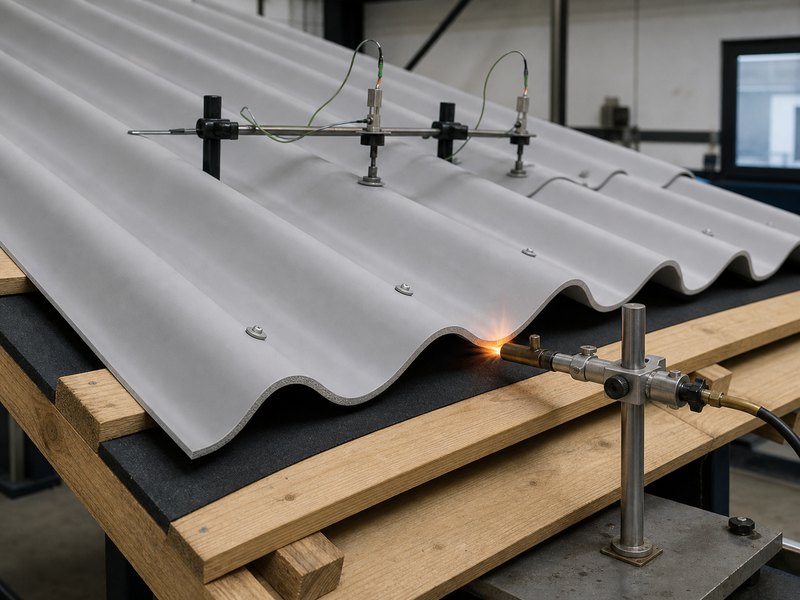
Eine Brandschutzklasse für Dachbahnen aus Kunststoff ist nur dann aussagekräftig, wenn sie die Zuständigkeit angibt, die Feuerfrage, die Testmethode und -ausgabe, der geprüfte Prüfling oder Dachaufbau, und die gemeldete Klassifizierung mit ihren Grenzen. Ein Etikett wie „Klasse A,„B-s1,d0“ oder „flammhemmend“ verliert seinen technischen Wert, wenn diese Angaben verschwinden.
Diese Unterscheidung ist wichtig, da nicht alle Brandtests die gleiche Frage stellen. Eine Methode besteht darin, eine kleine Probe einer kleinen Flamme auszusetzen. Ein anderer misst die Wärmefreisetzung unter Strahlungsenergie. Bei einem Dachtest kann die Flammenausbreitung und -durchdringung über eine komplette Konstruktion beurteilt werden. Bei einer Feuerwiderstandsprüfung wird gefragt, wie lange ein Bauelement definierte Funktionen beibehält. Diese Ergebnisse können einander nicht ersetzen.
Was kennzeichnet die Brandschutzklasse einer Kunststoff-Dachbahn??
Ein vertretbarer Anspruch hat fünf Koordinaten. Falls einer fehlt, Der Leser kann nicht genau bestimmen, was das Ergebnis abdeckt.
| Koordinieren | Was muss der Forderung beigefügt bleiben? | Warum es wichtig ist |
|---|---|---|
| Zuständigkeit | Land, übernommener Kodex, Projektspezifikation, oder Regulierungssystem | Der gleiche Buchstabe kann in verschiedenen Systemen unterschiedliche Bedeutungen haben. |
| Feuerfrage | Zündfähigkeit, Wärmeabgabe, Oberflächenverbrennung, Außendachbrand, oder Feuerwiderstand | Jede Frage beschreibt eine andere Gefahren- oder Leistungsfunktion. |
| Verfahren | Standardnummer, Teststrecke, und Ausgabe | Belichtung, Probenposition, Messungen, und Kriterien ergeben sich aus der Methode. |
| Geprüfte Konstruktion | Material, Produkt, Profil, Dicke, Deck, Unterlage, Verbindungselemente, Gelenke, und Montage | Eine Änderung der Konstruktion kann das Ergebnis verändern oder es aus dem Berichtsumfang verschieben. |
| Ergebnis | Messwerte oder vollständige Klassifizierung, zzgl. Einsatzbereichsgrenzen | Ein Ergebnis beschreibt nur die definierten Beweise, nicht jedes Produkt derselben Materialfamilie. |
„Brandschutz“ ist daher ein Sammelbegriff, keine vollständige Spezifikation. Die erste Aufgabe besteht darin, herauszufinden, welches Brandverhalten das Dokument tatsächlich bewertet.

Welche Feuerfrage beantwortet den jeweiligen Test??
Testnamen erscheinen in technischen Dateien häufig zusammen, aber ihre Bereiche bleiben getrennt.
| Methode oder System | Primäre Frage | Typische Ausgabe | Was es allein nicht beweist |
|---|---|---|---|
| ISO 11925-2:2026 | Entzündet sich eine vertikal ausgerichtete Probe oder hält sie eine begrenzte Flammenausbreitung unter einer definierten Einwirkung kleiner Flammen aufrecht?? | Zündfähigkeitsbeobachtungen, die im Rahmen einer Klassifizierungsroute verwendet werden | Klassifizierung des Außendachs oder struktureller Feuerwiderstand |
| ISO 5660-1:2015 | Wie gibt eine Probe bei kontrollierter Bestrahlung Wärme ab und erzeugt Rauch?? | Wärmefreisetzungsrate, Rauchentwicklung, Zeit bis zur Zündung, und zugehörige Daten | Eine komplette Dachklasse unter Code |
| ASTM E84-26a | Wie verhält sich ein montiertes Material im Tunneloberflächen-Brenntest?? | Anzeichen für Flammenausbreitung und Rauchentwicklung | Nichtbrennbarkeit oder eine Dachklassifizierung nach ASTM E108 |
| ASTM E108-25 / UL 790 | Wie reagiert eine definierte Dacheindeckung oder Dachkonstruktion auf eine simulierte Brandeinwirkung von außen?? | Klasse A, B, oder C für die geprüfte Konstruktion, ggf | Leistung ungeprüfter Substitutionen oder baulicher Feuerwiderstand |
| Feuerreaktionssystem der EU | Welchen Beitrag leistet ein Bauprodukt im Rahmen der relevanten Klassifizierungsroute zum Brand?? | A1, A2, B, C, D, E, oder F, oft mit den Suffixen Rauch und Tröpfchen | Ein US-Amerikaner. Dach Klasse A, B, oder C |
| EU-Außendachsystem | Wie verhält sich eine definierte Dachkonstruktion unter einer externen Brandteststrecke?? | BROOF, KREUZ, DROOF, RUNTER, oder FROOF mit dem entsprechenden t-Suffix | Eine Brandreaktionsklasse oder ein Ergebnis einer anderen T-Route |
Die Brandreaktion beschreibt, welchen Beitrag ein Produkt leistet, wenn es einem Feuer ausgesetzt ist. Der Feuerwiderstand beschreibt, wie lange ein Bauelement Kriterien wie die Integrität beibehält, Isolierung, oder Tragfähigkeit unter einer bestimmten Belastung. Ein dünnes Dachblech kann über Daten zum Brandverhalten verfügen, daraus ergibt sich jedoch keine stündliche Feuerwiderstandsbewertung.
Warum ASTM E84 keine Dachklassifizierung ist
ASTM E84 berichtet über vergleichende Oberflächenbrenneigenschaften für in einem Tunnel montierte Materialien. Seine Ergebnisse sind der Flammenausbreitungsindex und der Rauchentwicklungsindex. ASTM warnt auch vor Schmelzen, tropft, Delaminierung, und anderes Verhalten der Probe können die Interpretation beeinflussen. Die Methode verwendet nicht die in ASTM E108 definierten externen Dachbelichtungen.
ASTM E108 bewertet Dacheindeckungen unter simuliertem Feuer von außen. Dabei werden Verhaltensweisen wie die Oberflächenausbreitung der Flammen und das Eindringen durch die Dachterrasse berücksichtigt. Der 2024 Die internationale Bauordnung verbindet Klasse A, B, und C-Dachaufbauten nach ASTM E108 oder UL 790. Der Modellcode beschreibt Klasse A als schwerwiegend, Klasse B als mittelmäßig, und Klasse C als leichte Brandprüfung.
Folglich, Ein ASTM E84-Index kann nicht in „Dachklasse A“ umbenannt werden. Es kann auch keine Nichtbrennbarkeit festgestellt werden. Die Standardanzahl und -ausgabe muss beim Ergebnis bleiben.
Warum externe Dachtests eine Konstruktion bewerten
Ein Dach besteht aus einer Reihe interagierender Komponenten. Die freigelegte Abdeckung kann zuerst die Flamme erhalten, aber die Profilform, Gelenke, Verbindungselemente, Lufträume, Unterlage, Unterstützung, und Deck beeinflussen die Wärmeübertragung und die Flammenwege. Die UL-Richtlinie erklärt auch, dass eine Unterlage zur Dachklassifizierung beitragen kann, insbesondere über einem brennbaren Deck.
Diese Montagelogik gilt für Well- und Fliesenprofile. A PVC-Dachbahn kann je nach Dicke unterschiedlich sein, Geometrie, Schichtstruktur, Pigmentierung, und Formulierung. Diese Variablen können das Schmelzen beeinflussen, Öffnungen, Flammenweg, und Freilegung der darunter liegenden Schichten. Ein Bericht für eine Konfiguration deckt nicht automatisch alle Varianten ab, die unter demselben allgemeinen Produktnamen verkauft werden.
Die gleiche Disziplin gilt für eine UPVC-Dachbahn. Ersetzen des Decks, Weglassen einer Unterlage, Vergrößerung des Pfettenabstands, Befestigungselemente ändern, Änderung der Rundengeometrie, oder die Verwendung einer anderen Dicke kann dazu führen, dass das installierte Dach über den geprüften Anwendungsbereich hinausgeht. Die materielle Familie allein kann diese Frage nicht lösen.
Warum amerikanische und europäische Brandklassen nicht übersetzt werden können
Ähnliche Buchstaben erzeugen ein falsches Gefühl der Gleichwertigkeit. In den USA. Modellcode-Kontext, Dach Klasse A, B, oder C bezieht sich auf äußere Feuereinwirkung gemäß ASTM E108 oder UL 790. Im europäischen Feuerreaktionssystem, A1 bis F beschreiben einen anderen Klassifizierungsrahmen. Zusätzliche Symbole können Rauchentwicklung und brennendes Abtropfen beschreiben.
Auch für Dächer gibt es in Europa eine eigene Brandschutzklassifizierung. Ein Ergebnis wie BROOF(t1) oder BROOF(t4) enthält ein Testroutensuffix. Dieses Suffix ist Teil der Klassifizierung, da die Routen unterschiedliche Expositionsbedingungen und -kriterien verwenden. BROOF ohne das entsprechende Suffix ist unvollständig, und eine Route sollte nicht als Beweis für eine andere angesehen werden.
daher, UNS. Klasse A ist nicht dasselbe wie europäische A1. B-s1,d0 ist nicht dasselbe wie ein U.S. Dach der Klasse B. BROOF(T#) ist kein Brandschutzkurs. Jede Notation muss mit ihrer eigenen Methode verbunden bleiben, Zuständigkeit, und geprüfte Konstruktion.
So lesen Sie einen Brandtestbericht, ohne ihn zu übertreiben
Ein nützlicher Bericht hat einen Fingerabdruck. Die folgenden Details ermöglichen es einem technischen Team, das Dokument mit dem darin beschriebenen Produkt und der Dachkonstruktion zu verknüpfen:
- Laborname, Berichtsnummer, Ausgabedatum, und Akkreditierungsumfang;
- Prüfstandard, Ausgabe, Klassifizierungsstandard, und Teststrecke;
- Produktname, Profilzeichnung, Nenndicke, Masse, und Schichtbeschreibung;
- Probenvorbereitung, Konditionierung, Orientierung, und Montageart;
- Deck, Substrat, Unterlage, Stützabstand, Verbindungselemente, und Gelenkdetails;
- Beobachtungen, Messwerte, Einstufung, Gültigkeitserklärung, und Anwendungsbereich;
- Hersteller, Produktionsstandort, Probenauswahl, und nachvollziehbare Chargenidentität.
Die Marketingsprache sollte diesem Fingerabdruck niemals entkommen. „Selbstverlöschend“ beschreibt eine Beobachtung nur dann, wenn ihre Methode und Bedingungen bekannt sind. „Flammhemmend“ kann eine Formulierungsstrategie beschreiben, aber es ist keine Codeklasse. „Brandtest bestanden“ bleibt bis zur Methode unvollständig, Kriterium, Probe, und Ergebnis werden benannt.
Was kann die Fabrikkontrolle feststellen??
Werkskontrollen können dafür sorgen, dass das gelieferte Produkt einer definierten Konstruktion entspricht. Sie können die Identität des eingehenden Materials überprüfen, Formulierungskontrolle, Schicht und Gesamtdicke, Profilabmessungen, Masse pro Flächeneinheit, Oberflächenzustand, Farbe, und Chargenrückverfolgbarkeit. Diese Kontrollen reduzieren die Variation, Sie ersetzen jedoch nicht die unabhängige Klassifizierungsprüfung.
Diese Beweishierarchie ähnelt anderen Dachprüfungen. Ein kontrolliertes Schlagergebnis, Zum Beispiel, gilt für ein bestimmtes Exemplar und eine angegebene Methode und nicht für jede mögliche Installation. Das gleiche Prinzip kommt bei HESU vor Ergebnisse der Schlagprüfung von Dachbahnen aus Kunststoff: Beweise werden nützlich, wenn der Testaufbau und die Produktidentität sichtbar bleiben.
Brandbeweise Dritter beantworten die durch ihre Methode definierte Frage. Die Projektkonformität fügt aufgrund des übernommenen Codes eine weitere Ebene hinzu, Belegung, Gebäudetyp, Dachneigung, Deck, Brandtrennung, und örtliche Behörden können Einfluss auf den erforderlichen Bau nehmen. Eine Laborklassifizierung sollte diese Entscheidung unterstützen, kein Ersatz dafür.
Häufige Fehler bei der Brandschutzbewertung
| Schwache Aussage | Technisches Problem | Rückverfolgbare Form |
|---|---|---|
| „Das Blatt ist Klasse A.“ | Das System, Verfahren, Konstruktion, und Zuständigkeit fehlen. | Nennen Sie die vollständige Klassifizierung und geprüfte Dachkonstruktion. |
| „ASTM E84 beweist Dachklasse A.“ | Der Oberflächenbrenntunneltest wird mit einem externen Dachtest verwechselt. | Geben Sie die E84-Indizes als E84-Ergebnisse an; Verwenden Sie E108 oder UL 790 Beweise für die relevanten US-amerikanischen. Dachklasse. |
| „Das PVC ist nicht brennbar.“ | Ein materieller Familienname kann keine Nichtbrennbarkeit belegen. | Geben Sie den anwendbaren Test an, Probe, Ergebnis, und Begrenzung. |
| „BROOF hat bestanden.“ | Das Routensuffix und die Bauidentität fehlen. | Bewahren Sie das gesamte BROOF auf(T#) Notation und Berichtsumfang. |
| „Ein ähnliches Profil wurde getestet.“ | Ähnlichkeit beweist nicht die Abdeckung. | Bestätigen Sie dieses Profil, Dicke, Schichten, Montage, und Substitutionen fallen in den Anwendungsbereich des Berichts. |
Häufig gestellte Fragen
Sind PVC- und UPVC-Dachbahnen feuerfest??
„Feuerfest“ ist keine sinnvolle technische Klassifizierung. PVC- und UPVC-Dachprodukte können aufgrund ihrer Formulierung ein unterschiedliches Verhalten zeigen, Dicke, Profil, Schichten, Montage, und die Dachkonstruktion unterscheiden sich. Der jeweilige Prüfbericht muss den Anspruch konkretisieren.
Garantiert die flammhemmende Formulierung eine Dachbrandklasse??
NEIN. Zusätze können die Zündung verändern, Flammenausbreitung, Wärmeabgabe, Rauch, oder Tropfverhalten. Eine Rezepturbeschreibung stellt keine Einstufung einer fertigen Dachkonstruktion dar.
Ist Klasse A immer die höchste Bewertung??
Nur innerhalb des genannten Systems. Klasse A gemäß ASTM E108 oder UL 790 ist der höchste der USA. Die hier besprochenen externen Dachklassen. Es entspricht nicht dem europäischen A1-Brandverhalten.
Kann ein Ergebnis für eine Dicke eine andere Dicke abdecken??
Erst wenn der Bericht, Klassifizierungsdokument, oder zulässiger Anwendungsbereich umfasst diese Variante. Eine andere Dicke kann die Wärmeübertragung und das Produktverhalten verändern.
Gilt eine Brandschutzklasse für immer??
Ein Bericht bleibt an seine Testausgabe gebunden, Produktidentität, Fertigungskontrolle, und anerkannte Gültigkeitsbedingungen. Produkt- oder Konstruktionsänderungen bedürfen einer technischen Prüfung, und lokale Code-Anforderungen können sich ändern.
Technische Schlussfolgerung
Der Klassifizierungsbrief ist nur das sichtbare Ende einer längeren Beweiskette. Eine zuverlässige Brandschutzklasse für Dachbahnen aus Kunststoff behält fünf Koordinaten bei: Zuständigkeit, Feuerfrage, Methode und Edition, geprüfte Konstruktion, und begrenztes Ergebnis. Diese Struktur verhindert, dass Materialdaten zu einem Dachanspruch werden, hält amerikanische und europäische Systeme getrennt, und macht jede Aussage auf die Konstruktion rückführbar, die sie hervorgebracht hat.