Sei mesi fa, a contractor we work with in Shandong quoted a client on a factory roof renovation — standard corrugated metal, nothing unusual. The number came back 40% higher than the same job two years prior. The client didn’t walk away from metal because resin was trendy. He walked away because the math stopped working.
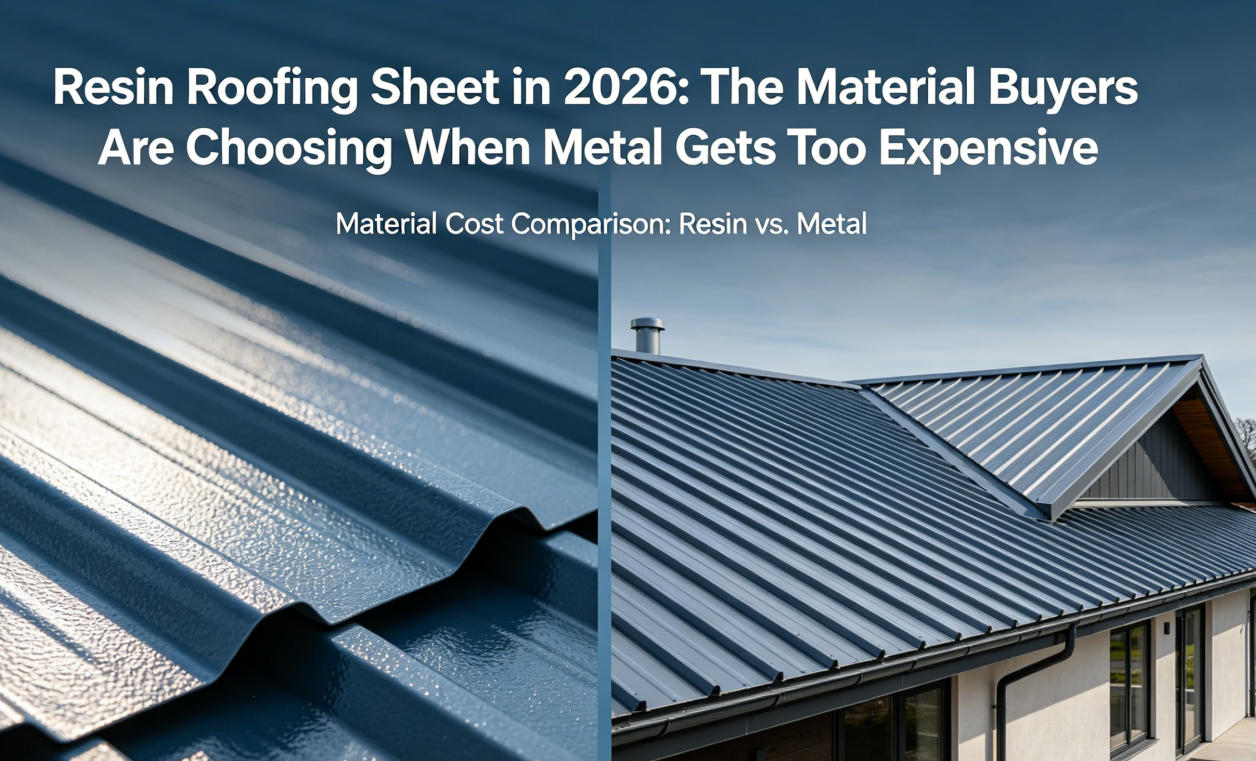
That conversation is happening on job sites everywhere right now. Metal roofing prices have been climbing steadily since 2022, E 2026 hasn’t offered any relief. For buyers who’ve been defaulting to metal out of habit, this is the year a lot of them are taking a serious look at resin roofing sheet for the first time — not as a compromise, but as the more rational choice.
Here’s an honest breakdown of what’s driving that shift and what you actually need to know before making the switch.
The Metal Price Problem Isn’t Going Away
The numbers behind the shift are straightforward. Steel and aluminum input costs have risen sharply over the past two years — tariff pressure, supply chain reorganisation, and sustained demand from infrastructure spending have all pushed prices up and kept them there. For metal roofing, this compounds quickly: the base material costs more, the anti-corrosion coatings cost more, and the installers cost more because the sheets are heavy and labour-intensive to handle.
What this means in practice is that metal roofing’s main historical advantage — perceived durability at a known price point — now comes with a significantly higher entry cost. For standard residential builds, agricultural structures, and light industrial projects, that premium is increasingly hard to justify.
Resin roofing sheet prices, by contrast, have remained relatively stable. The core inputs — PVC resin E ASA coating materials — haven’t seen the same commodity volatility as steel and aluminium. That price stability is part of what’s making resin look attractive to buyers who weren’t considering it two years ago.
What Resin Actually Offers
There are four places where resin roofing sheet genuinely outperforms metal on a like-for-like project basis. Worth being specific about each one.
Purchase price and total cost of ownership
On material alone, mid-grade resin roofing sheet typically runs 20–35% below comparable metal roofing. That gap exists before you factor in coatings. Metal in coastal areas, high-humidity environments, or anywhere near industrial fumes needs anti-corrosion treatment — an additional 15% or more on top of base material costs. Resin doesn’t rust. It doesn’t need treatment. That’s not a feature — it’s just the nature of the material.
Maintenance is where the long-term cost difference becomes significant. A metal roof in a tough environment needs seam inspection, rust treatment, and re-coating on a regular cycle. A resin roof in the same environment needs an annual wash. Over a 15-year window, that difference compounds considerably.
Performance in corrosive and coastal environments
This is where low-quality metal roofing specifically fails, and where good resin roofing specifically excels. Coated steel in a salt-air or acid-rain environment starts showing deterioration within 3–5 years in many cases — not because metal roofing is poorly designed, but because it’s fighting a losing battle against electrochemical corrosion that coatings can only slow, not stop.
A properly made ASA-surface resin sheet — with an ASA layer making up at least 18% of total thickness — handles UV, salt spray, acid rain, and chemical exposure without the same degradation mechanism. The surface doesn’t rust because there’s no iron in it. For agricultural buildings near livestock, factories with exhaust fumes, or coastal projects, this is a genuine structural advantage, not a marketing claim.
Weight and installation
Resin roofing sheet is roughly one-fifth the weight of standard metal tile. On paper that sounds like a minor spec difference. On a real job site it means a lot more than that.
For older structures being reroofed, weight reduction eliminates the structural reinforcement conversation entirely in most cases. For new builds with lightweight framing, it changes the load calculations. And from a pure installation standpoint, lighter sheets that are easier to cut and handle translate directly into faster completion times. A crew that would spend three days on a 1,000 sqm metal roof will typically finish the same area in under two days with resin — and that’s without any particular rush.
Thermal and acoustic performance
Metal roofing conducts heat and transmits noise. Both are well-documented characteristics, and both matter more than people expect until they’re living or working under a metal roof in summer or during heavy rain. Resin has lower thermal conductivity and better sound attenuation — the indoor temperature difference in summer can reach 3–5°C compared to metal, and rain noise is measurably reduced. For residential projects, sunrooms, or any space where comfort matters, this is a real quality-of-life factor.
How to Buy Without Getting It Wrong
The resin roofing market has a significant quality problem at the lower end. Because the material looks similar regardless of grade, unscrupulous manufacturers can reduce ASA layer thickness, substitute cheaper filler materials into the base, or skip UV stabilisers entirely — and the difference won’t be visible at the point of purchase. It shows up two or three years later, when the surface starts chalking, the colour fades unevenly, and the tile becomes brittle.
Three things to verify before committing to a supplier:
ASA layer content. Ask for a test report. The ASA surface layer should account for at least 18% of total sheet thickness. This is the number that determines UV resistance and long-term colour stability. Any supplier unable or unwilling to provide documentation for this spec should be disqualified.
Base material composition. High-quality resin roofing sheet uses 80% or more virgin PVC in the base layer. Recycled filler reduces impact resistance and accelerates aging. Again, ask for the material composition certificate.
Warranty terms in writing. A 10-year performance warranty from a manufacturer who’ll still be operating in 10 years is meaningful. A verbal assurance from a low-price vendor is not. Read what the warranty actually covers — fade resistance, structural integrity, and what the claims process looks like.
The Honest Bottom Line
Metal roofing isn’t a bad product. For certain applications — long-span industrial structures, high-fire-risk environments, very high-wind zones — it’s still the right specification. But for the majority of projects where buyers have historically defaulted to metal without thinking too hard about it — residential reroofing, fabbricati agricoli, factory slope renovations, rural construction — resin roofing sheet now makes a stronger case on cost, performance, and practicality.
The shift happening in 2026 isn’t buyers chasing a trend. It’s buyers doing the maths and arriving at a different answer than they would have three years ago.
Domande frequenti
How much cheaper is resin roofing sheet than metal in 2026? On material alone, typically 20–35% less. Once you add anti-corrosion treatment for metal in harsh environments, the gap widens further. Over 15 anni, factoring in maintenance cycles, total cost of ownership for resin can run significantly below metal — the exact difference depends on environment and product grade.
How long does a quality resin roofing sheet actually last? A sheet with a verified ASA layer of 18% or more of total thickness, installed correctly, will hold colour and structural integrity for 10 years as a guaranteed minimum. In moderate climates with proper installation, 25–30 years is realistic. In harsh coastal or industrial environments, it will typically outlast uncoated or lightly coated metal roofing by a meaningful margin.
Is resin roofing sheet suitable for factories and agricultural buildings? SÌ, and it’s particularly well-suited to these environments. Resistance to chemical fumes, animal waste, and high-humidity conditions is where resin holds a structural advantage over metal. The weight also makes it practical for large-span structures where dead load matters.
What’s the most important spec to check when buying? ASA layer content — ask for a test report confirming it’s at least 18% of total thickness. This single number determines UV resistance, colour stability, and surface durability more than any other specification. Suppliers who can’t produce documentation for it are almost certainly selling below-spec product.
Is resin harder to install than metal? NO. It’s lighter, easier to cut, and faster to handle on site. Most experienced crews complete resin installations 30–40% faster than equivalent metal jobs, which directly reduces labour costs on any project where you’re paying by the day.