
A indústria de coberturas tem um padrão confiável: os preços sobem, eles raramente voltam, e os compradores que mais se prejudicam são aqueles que presumiram que tinham mais tempo.
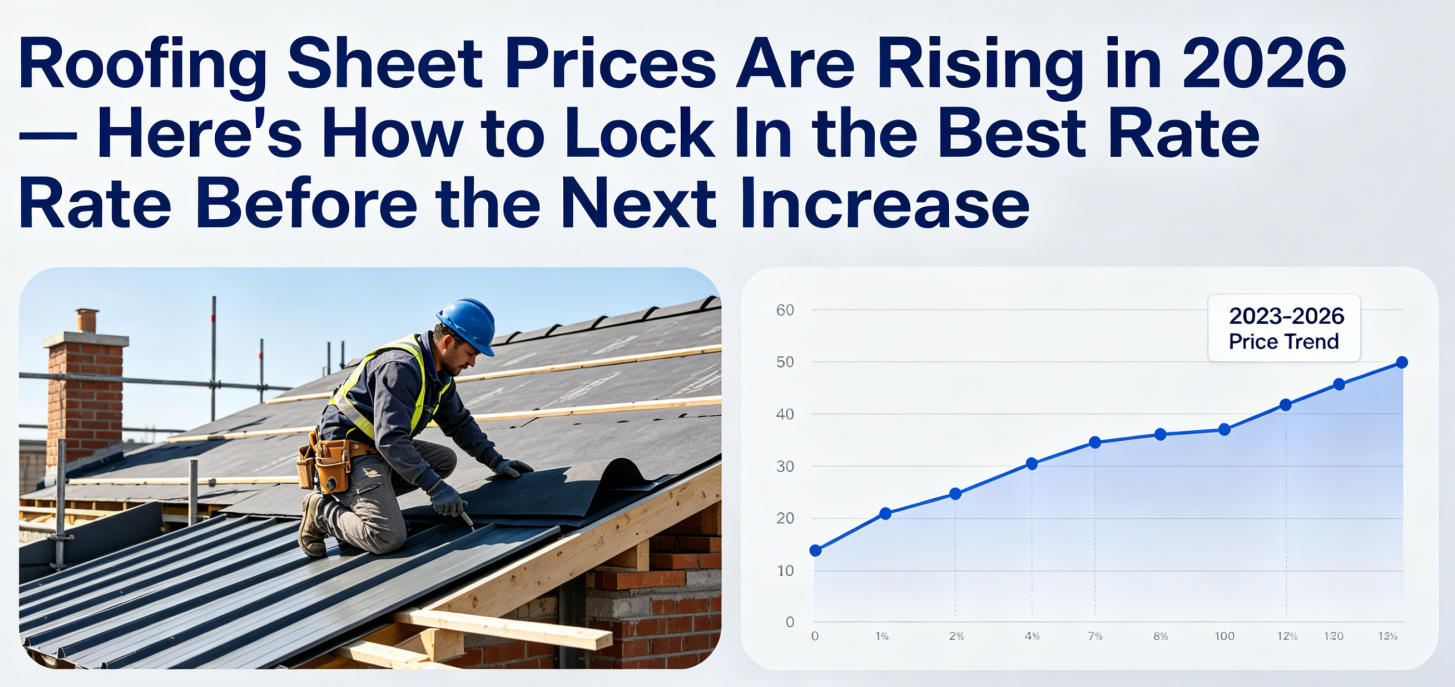
2026 está seguindo esse padrão. Os principais fabricantes anunciaram aumentos generalizados de preços de 4–8% somente no primeiro trimestre, with effective dates between late March and mid-April. That round has already landed. The question now is whether a second wave follows — and based on what’s driving costs at the input level, there’s no strong reason to expect prices to stabilise before year-end.
If you have a roofing project on the horizon, here’s what’s actually pushing prices up, what you can expect to pay right now, and five things you can do to get ahead of the next increase.
What’s Actually Driving the Price Increases
Three factors are compressing margins at the production level and passing the cost downstream to buyers. None of them are temporary.
Raw material costs. Steel and aluminium have seen the sharpest increases — aluminium mill shapes up over 30% year-on-year, steel products up more than 20% as of early 2026. For metal roofing sheets, this feeds directly into per-square-metre pricing. For non-metal options including PVC and composite resin sheets, the pressure is different but real: upstream chemical inputs and insulation components have both risen compared to 2025 levels.
Trade policy and tariff exposure. Section 232 tariffs on steel and aluminium imports are sitting at 50% as of mid-2025, and they remain in effect. The coverage has expanded to include over 400 derivative product categories — meaning metal components like flashing, fixadores, and prefabricated panels are now caught in the tariff net, not just raw metal. Supply chains that relied on imported materials have restructured, but restructuring itself has costs that get passed on.
Demand for higher-specification products. The market is moving upmarket. Buyers in residential, comercial, and agricultural segments are increasingly specifying longer-life, lower-maintenance materials — and those products carry higher price tags than the baseline options they’re replacing. As the average specification level rises across the market, the average transaction price rises with it, even before raw material inflation is factored in.
What Different Roofing Sheet Types Cost in 2026
Use these as reference points when evaluating quotes — not ceilings, but benchmarks. Regional variation, project size, and custom specifications all affect final pricing.
| Roofing Sheet Type | Price Per Sq. Metre | Notes |
|---|---|---|
| Lightweight steel-frame roofing sheet | $27.50–$62 | Higher-load mezzanine and LOFT panels sit toward the upper end |
| Foam concrete composite sheet | $41–$82.50 | Specialist blast-release panels add 15–30% due to custom manufacturing |
| ASA/PVC resin roofing sheet | ¥45–¥150 (~$6–$21) | Mid-range covers most residential and light commercial requirements |
| Aluminium-magnesium-manganese (AMM) sheet | Market-linked | Pricing moves with aluminium ingot prices and coating grade — get quotes tied to a specific date |
One note on AMM panels specifically: because the base material is a commodity, any quote you receive today may not reflect what you’ll pay in 60 days. If you’re specifying AMM for a large project, the contract structure matters as much as the quoted number.
Five Ways to Buy Smarter in a Rising Market
None of these are complicated. They’re the kind of things experienced procurement managers do as standard practice, and they become more valuable the higher the market goes.
Lock in pricing with a written fixed-price contract. The most direct way to insulate a project from future increases is to sign a supply agreement that fixes price, quantidade, and delivery terms now. For large commercial or multi-site projects, a framework agreement often unlocks bulk pricing at the same time — typically 10–15% below spot pricing for meaningful volume commitments. The contract needs to specify product spec in detail, not just category — thickness, surface layer grade, cor, cut length — because vague specs leave room for substitution.
Buy during Q1 or Q3. Construction demand peaks in Q2 and Q4. Suppliers price accordingly. The first and third quarters are when order books are softer, lead times are shorter, and there’s more room to negotiate on both price and delivery terms. If your project timeline has any flexibility, shifting the procurement window by a few weeks can make a measurable difference.
Match the specification to the actual requirement. Premium features cost money, and many projects are over-specified. A standard residential reroofing project doesn’t need industrial-grade anti-corrosion treatment. A light agricultural building doesn’t need the same fire rating as a public facility. Matching the product grade to what local building codes and project conditions actually require — rather than defaulting to the highest available grade — can reduce material costs by 15–20% without compromising on anything that matters.
Go direct to manufacturers on larger orders. Every link in the distribution chain adds margin. For projects above a certain size, dealing directly with the manufacturer eliminates reseller markup and typically improves lead time reliability. The tradeoff is that direct purchasing usually requires larger minimum order quantities and more upfront coordination on logistics. It’s worth it at scale; less so for small single-property jobs.
Watch aluminium and steel commodity prices before committing. For any project involving metal roofing sheet, the timing of your purchase order relative to commodity price movements matters. Aluminium and steel prices fluctuate on weekly cycles. UM 5% dip in input costs can translate to several percentage points off the final material invoice on a large order. Following the Producer Price Index for metals and placing orders in the period after a dip rather than before a spike is a simple way to capture savings that most buyers leave on the table.
FAQs
How much will roofing sheet prices increase through the rest of 2026? Based on current market conditions, industry projections point to a further 7–12% average increase across most roofing sheet categories before year-end. Metal panels face the steepest pressure due to commodity exposure; resin and composite sheets are less volatile but not immune to upstream cost increases.
What’s the most cost-effective roofing sheet type in 2026? For most standard residential and light commercial projects, mid-grade ASA/PVC resin sheet offers the best balance of upfront cost, durability, and low maintenance overhead. Lightweight steel-frame sheet remains the entry-level option for basic structures, starting around $27.50/sqm. The right answer depends heavily on the application and environment.
Should I buy now or wait? The case for buying now is straightforward: the three factors driving price increases — raw material costs, tariff pressure, and demand for premium product — are all structural, not temporary. Prices rarely reverse in this environment. Waiting typically means paying more for the same material.
Can I negotiate in a rising market? Sim, but the leverage points are different from a flat or falling market. Volume, contract length, and off-peak timing are where negotiating room exists. Trying to negotiate on spot price alone in a rising market rarely works — suppliers have less incentive to discount when their order books are full.
What drives AMM roofing sheet pricing specifically? Aluminium ingot prices are the primary variable, followed by the grade of anti-corrosion coating specified. Panel thickness and UV resistance rating also affect cost. Because the base material is market-linked, AMM pricing is more volatile than resin or composite alternatives — which is worth factoring into budget planning for projects with long procurement timelines.