
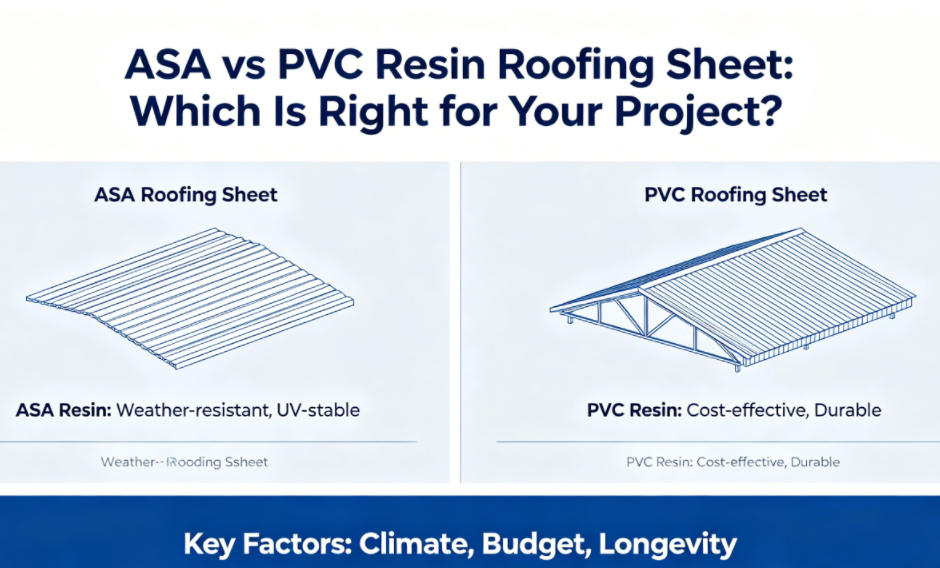
يبدو كلا المنتجين متشابهين في ورقة المواصفات. كلاهما خفيف الوزن, مقاومة للتآكل, وأرخص بكثير من البلاط المعدني أو الطيني. والفرق بينهما غير مرئي عند نقطة الشراء، ويكون واضحًا جدًا بعد مرور خمس سنوات على عمر السقف.
السؤال الأساسي ليس ما هي المواد الأفضل. إنه الخيار المناسب للمدة التي يحتاجها المبنى الخاص بك لأداء, حيث يقع, وما سيتعرض له السقف. إليك ما يفصل بين الاثنين بالفعل.
ما الذي يجعلهم مختلفين على المستوى المادي
لوح التسقيف من راتينج PVC
لوح التسقيف PVC عبارة عن منتج ذو طبقة واحدة. المادة الأساسية هي راتينج البولي فينيل كلوريد, مختلطة مع مثبتات, مثبطات اللهب, والحشوات الوظيفية. يحافظ الهيكل أحادي الطبقة على انخفاض تكاليف التصنيع. وهذا يعني أيضًا أن السطح الذي يواجه الطقس مصنوع من نفس المادة بالكامل، ولا توجد طبقة واقية مخصصة.
تحت التعرض المستمر للأشعة فوق البنفسجية, يتأكسد PVC. السطح يتلاشى, يصبح هشا, ويفقد السلامة الهيكلية. في المناخات المعتدلة, تستغرق هذه العملية 10-15 سنة. في البيئات ذات الأشعة فوق البنفسجية العالية – جنوب شرق آسيا, الشرق الأوسط, شمال أستراليا, جنوب الصين - يمكن أن يظهر التدهور المرئي في غضون ثلاث إلى خمس سنوات.
لوح التسقيف من الراتنج ASA
لوح التسقيف ASA عبارة عن هيكل مركب. يستخدم PVC كقاعدة للمتانة والأداء الهيكلي. علاوة على ذلك, ASA مقذوف مشترك (أكريلونتريل ستايرين أكريليت) يتم لصق الطبقة بشكل دائم على السطح.
طبقة ASA هذه هي التي تغير معادلة الأداء. إنه يمنع 99% من الأشعة فوق البنفسجية. يقاوم الحمض, قلوي, والتآكل الملحي. إنه يحتفظ بسلامة اللون والسطح لمدة تتراوح بين 20 و 30 عامًا في الظروف التي قد تؤدي إلى تدهور PVC القياسي خلال عقد من الزمن.
طبقة ASA ليست طبقة طلاء يتم تطبيقها بعد التصنيع. وهو مقذوف بشكل مشترك، مما يعني أنه يرتبط على المستوى الجزيئي أثناء الإنتاج. لا تقشر أو تتفكك.
مقارنة الأداء: الأرقام التي تهم
| عامل الأداء | لوح التسقيف من راتينج PVC | لوح التسقيف من الراتنج ASA |
|---|---|---|
| مقاومة للأشعة فوق البنفسجية والطقس | يتلاشى ويتحلل تحت الأشعة فوق البنفسجية المستمرة. ضعف الاحتفاظ بالألوان بعد 3-5 سنوات في البيئات ذات الشمس العالية | كتل 99% من الأشعة فوق البنفسجية. يحتفظ 95% من اللون الأصلي بعد 10 سنوات من التعرض لأشعة الشمس المباشرة |
| خدمة الحياة | 10– 15 سنة في المناخات المعتدلة. أقصر في البيئات القاسية أو عالية التآكل | 20– 30 سنة. يحمل الأداء عبر مجموعة واسعة من المناخات وظروف التعرض |
| خيارات الألوان والاحتفاظ بها | نطاق ألوان محدود. المظهر يتدهور بسرعة نسبيا | نطاق ألوان واسع. ثبات اللون مدعوم بضمان لمدة 10 سنوات على المنتجات عالية الجودة |
| مقاومة التآكل | جيد. مصممة للحماية الأساسية من التآكل في البيئات القياسية | ممتاز. يحتفظ بمقاومة التآكل الكاملة للـ PVC بالإضافة إلى حماية إضافية من الطقس من طبقة ASA |
| مقاومة اللهب | الأداء القياسي لمثبطات اللهب | يحتفظ بخصائص مثبطات اللهب PVC. تصنيف الحريق من الفئة ب على المنتجات عالية الجودة |
| تكلفة الوحدة | تكلفة أولية أقل | 20– 50% أعلى من PVC. انخفاض التكلفة الإجمالية للملكية 20+ سنين |
مقارنة التكلفة مع مرور الوقت
إن علاوة السعر البالغة 20-50% لـ ASA على PVC تبدو كبيرة عند نقطة الشراء. أكثر من نافذة لمدة 20 عاما, التغييرات الحسابية.
يحتاج السقف PVC في المناخ المعتدل إلى الاستبدال بعد 10-15 سنة. وهذا يعني دورة استبدال كاملة – مواد جديدة, التثبيت الجديد, التخلص من السقف القديم — خلال فترة الجودة سقف آسا سيظل يؤدي. عادةً ما تتجاوز تكلفة الاستبدال وحدها قسط السعر الأصلي لـ ASA.
في المناخات القاسية, البيئات ذات الأشعة فوق البنفسجية العالية, أو المناطق الساحلية والصناعية, يتحلل PVC بشكل أسرع. يتم تقصير دورة الاستبدال. تتحول مقارنة التكلفة لصالح ASA.
بالنسبة للهياكل المؤقتة أو المشاريع قصيرة الدورة حيث لن يكون المبنى نفسه قيد الاستخدام لأكثر من 10 سنين, إن التكلفة الأولية المنخفضة للـ PVC هي الاختيار العقلاني. لأي شيء يهدف إلى أن يستمر لفترة أطول, التكلفة الإجمالية لحساب الملكية تفضل ASA.
أيهما مناسب لمشروعك
اختر لوح التسقيف من راتينج PVC متى:
يتمتع المبنى بعمر خدمة مقصود قصير - حظائر موقع البناء المؤقتة, المزارعين’ هياكل السوق, مستودعات التخزين الأساسية, أو مرآب بسيط حيث لا يحتاج السقف إلى أن يدوم أكثر من المشروع. متطلبات المظهر ضئيلة. الميزانية هي القيد الأساسي والأداء على المدى الطويل ليس هو الأولوية.
اختر لوح التسقيف الراتنجي ASA متى:
السقف يحتاج إلى أداء ل 20+ سنين. المبنى في درجة عالية من الأشعة فوق البنفسجية, الساحلية, رطب, أو بيئة الغلاف الجوي الصناعية. اللون والمظهر مهمان - المنازل السكنية, الفيلات, مباني المنطقة ذات المناظر الخلابة, أو العقارات التجارية حيث يمثل التدهور الجمالي مشكلة. المشروع عبارة عن تحويل أو تجديد من المسطح إلى المنحدر حيث قد تكون دورة الاستبدال الأخرى مزعجة ومكلفة.
قاعدة عملية:
إذا كنت تسأل عما إذا كانت ASA تستحق القسط, السؤال الذي يجب الإجابة عليه أولاً هو: كم من الوقت يحتاج هذا السقف إلى الاستمرار, وفي أي ظروف? لأي شيء أبعد من ذلك 15 سنوات في بيئة خارجية حقيقية, ASA هو دائمًا خيار التكلفة الإجمالية الأقل.
الأسئلة الشائعة
ما هي المدة التي تدوم فيها ألواح التسقيف المصنوعة من راتنج ASA مقارنة بالـ PVC?
يصل ASA عادةً إلى 20-30 عامًا. يعمل PVC لمدة 10-15 عامًا في المناخات المعتدلة وأقصر في البيئات القاسية أو ذات الأشعة فوق البنفسجية العالية. من الناحية العملية, سوف يدوم سقف ASA عالي الجودة أكثر من بديلين من PVC خلال نفس الفترة - وهو المكان الذي تتغير فيه مقارنة التكلفة الإجمالية بشكل كبير.
هل التكلفة الأولية الأعلى لـ ASA تستحق العناء؟?
لأي مشروع له مدة خدمة تتجاوزه 15 سنوات – نعم. تكلفة استبدال سقف PVC داخل تلك النافذة, بما في ذلك المواد, تثبيت, والتخلص من السقف القديم, عادة ما يتجاوز فرق السعر الأصلي. للهياكل المؤقتة ذات الدورة القصيرة, PVC هو الخيار الأكثر عقلانية.
كيف تتعامل ASA مع التعرض للأشعة فوق البنفسجية مقارنة بالـ PVC?
كتل الطبقة السطحية ASA 99% من الأشعة فوق البنفسجية ويحافظ على الأداء الهيكلي والجمالي 10+ سنوات في البيئات عالية الشمس. يفتقر PVC إلى هذه الطبقة الواقية المخصصة. في جنوب شرق آسيا, الشرق الأوسط, أستراليا, والمناخات المماثلة ذات الأشعة فوق البنفسجية العالية, يُظهر PVC تدهورًا واضحًا في السطح خلال ثلاث إلى خمس سنوات. يحمل ASA اللون والسلامة الهيكلية خلال نفس الفترة.
هل توفر كلتا المادتين مقاومة للتآكل?
كلاهما يقاوم الأحماض, القلويات, رُطُوبَة, والتعرض للمواد الكيميائية. تحتفظ ASA بمقاومة التآكل الكاملة لقاعدتها البلاستيكية وتضيف حماية الطقس للطبقة السطحية ASA. للبيئات الساحلية ذات رش الملح المستمر, أو المنشآت الصناعية التي تتعرض لأبخرة كيميائية, طبقة الحماية الإضافية لـ ASA تجعلها المواصفات الأكثر متانة.
ما هي المشاريع التي تناسبها صفائح التسقيف المصنوعة من راتينج PVC حقًا؟?
قصير المدى, المشاريع منخفضة الرؤية حيث الميزانية هي القيد الأساسي. حظائر الموقع المؤقتة, التخزين الزراعي الأساسي, أغطية مرآب بسيطة, والهياكل ذات عمر الخدمة المخطط له تحت 10 سنين. لهذه التطبيقات, إن دفع قسط ASA مقابل الأداء طويل المدى الذي لن تستخدمه ليس له معنى من الناحية المالية.